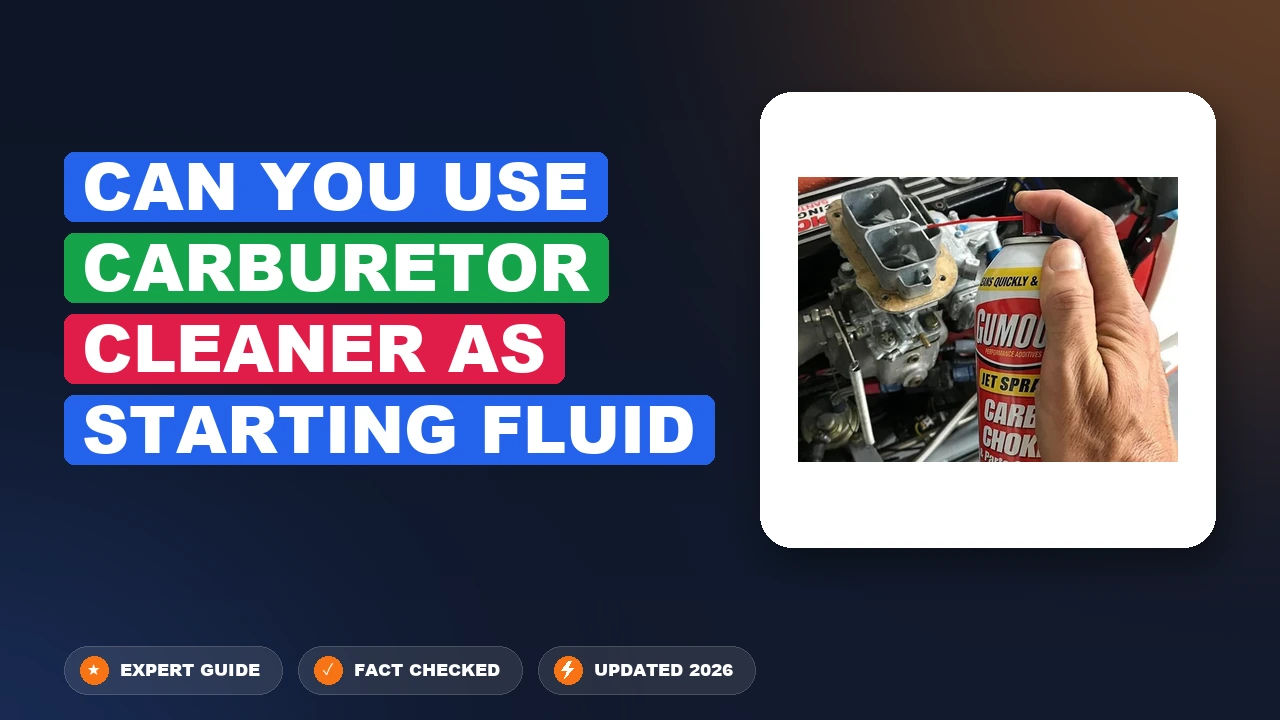
Can You Use Carburetor Cleaner As Starting Fluid 2026 Guide
No, you should not use carburetor cleaner as starting fluid because it has a much higher flash point and lacks the volatility needed for reliable ignition. Using it can lead to dry starts, engine damage, and frustration when the stubborn engine fails to turn over.
Can you use carburetor cleaner as starting fluid? The short answer is no, it is a risky and generally ineffective substitute that you should avoid. While both come in pressurized aerosol cans and live on the same shelf in your garage, they are engineered for entirely different chemical purposes.
When your engine refuses to turn over on a freezing morning in 2026, reaching for the wrong can under the hood can lead to a frustrating experience or even internal engine damage. Let us break down why using carb cleaner as a makeshift starting fluid is a bad idea, and what happens inside your cylinders when you try it.
Key Takeaways
- Carburetor cleaner is designed to dissolve varnish, not rapidly ignite.
- Ether-based starting fluid has a much lower flash point for cold starts.
- Using carb cleaner can wash away vital cylinder wall lubrication.
- A lack of proper volatility risks severe engine hesitation or failure.
- Always use actual starting fluid or proper alternatives when troubleshooting.
What Causes Engines to Need Starting Aids
Before forcing chemicals into your intake, you need to understand why an engine fails to start in the first place. Starting aids are designed to temporarily compensate for a lack of volatility in cold fuel or low cranking speed.

The Cold Weather Fuel Volatility Problem
Gasoline requires a specific vapor-to-air ratio to ignite. When temperatures drop significantly, fuel does not vaporize easily inside a cold intake manifold. Instead of creating an ignitable mist, the fuel condenses on the cold metal walls of the cylinders. Ether-based starting fluid provides an ultra-volatile fuel source that catches a spark at much lower temperatures than standard gasoline, coaxing the engine to life until the block warms up.
Low Compression and Weak Ignition
Older or worn engines often suffer from reduced compression or slow starter motor speeds. These mechanical shortcomings prevent the air-fuel mixture from getting hot enough under compression to ignite properly. A quick burst of a true starting aid bridges that gap by offering an extremely low flash point, giving the combustion chamber the extra boost it needs to overcome a weak stroke.
Can You Use Carburetor Cleaner as Starting Fluid Made Easy: Your Essential Action Plan
Stuck on the side of the road or in your garage with a stubborn engine that refuses to fire up, only to realize you are completely out of traditional starting fluid? Many DIY mechanics wonder if they can substitute carburetor cleaner in a pinch. While both products come in aerosol cans and are chemical solvents, they possess vastly different chemical properties and flash points. This comprehensive guide will walk you through the realities, risks, and precise procedures for evaluating whether you can safely use carburetor cleaner as starting fluid, how to do it correctly if necessary, and when you should avoid the practice entirely.
Step 1: Understand the Chemical Differences
What you need: Access to the internet or product safety data sheets (SDS) for both carburetor cleaner and starting fluid.
Instructions: Before spraying any chemical into your engine’s air intake, you must understand why they behave differently. Traditional starting fluid is primarily composed of highly volatile diethyl ether, which has a very low flash point and ignites with minimal spark or compression. Carburetor cleaner, on the other hand, is designed to dissolve stubborn varnish, carbon deposits, and gum. It typically uses chlorinated solvents or heavy petroleum distillates with a much higher flash point. Because it is far less volatile than ether, it does not catch fire easily, meaning it lacks the instant punch required to kickstart a cold, dead engine. Knowing this chemical reality prevents you from flooding the engine with non-igniting liquids.
Pro Tip: Never assume two aerosol sprays with plastic red straws are interchangeable; always check the active ingredients on the back of the can.
Step 2: Determine Your Engine Type and Situation
What you need: Visual access to the engine bay of your vehicle, lawnmower, generator, or small engine.
Instructions: Assess what kind of engine you are trying to start. If you are working on a modern, fuel-injected passenger car or truck, you should completely abandon the idea of using carburetor cleaner as starting fluid. Modern intake systems have numerous plastic sensors, delicate mass air flow (MAF) meters, and rubber gaskets that harsh carburetor cleaner solvents will permanently melt or damage. However, if you are dealing with an older carbureted small engine, such as a lawnmower, snowblower, or vintage farm tractor with a cast-iron intake, using carburetor cleaner as an emergency alternative has a much higher success rate and a lower risk of component destruction.
Pro Tip: If the engine has a plastic intake manifold, do not use harsh solvent-based cleaners as a starting aid due to the risk of chemical degradation.
Step 3: Access the Air Intake System
What you need: Screwdriver, nut driver, or pliers depending on your air filter housing clamps.
Instructions: To introduce any chemical aid directly into the combustion chamber, you must bypass the air filter. Locate the air filter box or the air intake snorkel leading directly to the carburetor throat or throttle body. Loosen the metal or plastic hose clamps securing the intake ducting, and carefully pull the duct away to expose the throat of the carburetor or throttle butterfly valve. On small engines, simply unlatch the air filter cover, remove the paper or foam filter element, and set it safely to the side. Ensure no loose debris or dirt falls past the open intake while you are exposing the internal passages.
Pro Tip: Always work in a well-ventilated outdoor area or a widely open garage, as aerosol propellants and chemical fumes accumulate rapidly.
Step 4: Apply a Measured Burst of Carburetor Cleaner
What you need: Can of chlorinated or non-chlorinated carburetor cleaner equipped with the red extension straw.
Instructions: Insert the red plastic extension straw firmly into the nozzle of the carburetor cleaner can. Because carburetor cleaner is much heavier and less volatile than ether, you will need slightly more of it, but restraint is still crucial to prevent hydro-locking. Spray a short, two-second burst directly down the throat of the carburetor or straight past the throttle plate. If you are working on a multi-cylinder car engine, aim the spray toward the open throttle body plate. Immediately set the aerosol can down a safe distance away from the vehicle and prepare to crank the engine before the localized vapors begin to dissipate.
Pro Tip: Never spray carburetor cleaner onto exterior painted surfaces, as the aggressive solvents will strip automotive clear coat and paint instantly.
Step 5: Crank the Engine Immediately
What you need: Vehicle ignition key or the pull-start cord on a small engine.
Instructions: Act quickly after spraying the chemical into the intake. Turn the ignition key to the crank position, or pull the starter cord briskly. Listen closely as the engine turns over. If the carburetor cleaner has enough volatility to catch a spark, you will hear the cylinders begin to fire, sputtering momentarily before attempting to run. If the engine catches and dies, do not immediately empty half the can into the intake. Give the starter motor a break to prevent overheating, wait at least thirty seconds, and assess whether you need a second, much smaller application.
Pro Tip: If the engine does not even sputter after a direct spray of carburetor cleaner, your problem is likely a complete lack of spark or severe fuel delivery failure, not just a weak fuel mixture.
Step 6: Evaluate Results and Address Root Causes
What you need: Spark plug wrench, multitester, or basic hand tools for further troubleshooting.
Instructions: Once the engine either starts or refuses to cooperate, evaluate the outcome. If it fired up briefly and then died, you have confirmed that the engine has compression and spark, but its normal fuel supply system (like a clogged carburetor jet or a failed fuel pump) is failing. Carburetor cleaner is strictly an emergency diagnostic band-aid, not a permanent fix. If the engine started successfully, allow it to run on its own fuel system if possible, and plan to thoroughly clean or rebuild the fuel delivery components later. Store the carburetor cleaner away properly and reassemble your air intake housing securely.
Pro Tip: Relying on chemical sprays repeatedly to start an engine can wash the oil film off cylinder walls, leading to premature internal engine wear.
✅ Final Checklist
- Verified that the engine is an older carbureted or simple small engine rather than a modern fuel-injected vehicle.
- Exposed the air intake safely without letting debris fall into the combustion chamber.
- Applied a conservative, measured burst of carburetor cleaner without flooding the engine.
- Reinstalled and secured the air filter housing and intake clamps properly after testing.
- Confirmed whether the ignition or fuel system needs actual repair rather than temporary chemical aids.
Important Notes:
- Always wear safety glasses and chemical-resistant gloves when handling automotive solvents.
- Seek professional mechanic assistance if the engine refuses to run even with chemical aids, as internal mechanical issues or total ignition failure may be present.
- Estimated time for this diagnostic process is 10 to 15 minutes; cost is negligible if you already own a can of carburetor cleaner (roughly $4 to $7 retail).
How Chemical Differences Prevent Carb Cleaner from Working
The core issue comes down to basic chemistry. Carburetor cleaner and starting fluid are formulated with entirely different active ingredients, yielding drastically different physical properties under pressure.
Flash Point and Volatility Discrepancies
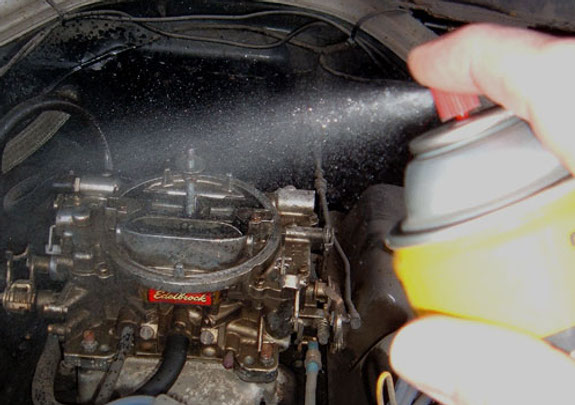
True starting fluid relies primarily on diethyl ether, a chemical with a remarkably low flash point of approximately minus 45 degrees Fahrenheit. This means it ignites effortlessly with even a weak spark. Carburetor cleaner, conversely, is designed to dissolve stubborn carbon varnish, gum, and lead deposits. To do this safely without flashing inside a hot carburetor throat during normal operation, manufacturers use heavy solvents with much higher flash points. When you spray carb cleaner into a stubborn engine, it lacks the high volatility required to catch a spark.
The Danger of Washing Away Cylinder Lubrication
Using carb cleaner as a starter fluid introduces a severe mechanical risk to your engine block. Because carb cleaner is a powerful solvent designed to strip away grease and varnish, spraying it directly into the intake washes the essential motor oil right off your cylinder walls. This leaves your pistons scraping against dry metal during those crucial first few revolutions. You risk scoring your cylinder walls and destroying your piston rings just to get an engine to fire up.
How to Safely Use Starting Fluid Instead of Carb Cleaner
When dealing with a stubborn engine in 2026, switching to dedicated starting fluid is the industry-standard approach recommended by the Automotive Service Excellence (ASE). Unlike high-flashpoint carburetor cleaner, proper ether-based starting fluid features an exceptionally low flashpoint, allowing it to ignite under cold cranking pressures as low as 50 psi. Proper application protects sensitive internal engine components.
Step-by-Step Application Guide
- Locate the air filter housing and remove the intake cover or disconnect the primary ducting leading directly to the throttle body.
- Spray a brief, one-second burst of professional-grade starting fluid directly into the air intake stream. Do not flood the system.
- Immediately attempt to crank the engine while keeping your foot slightly off the accelerator pedal to prevent over-rich flooding.
- Reinstall the air filter assembly and secure all housing clamps once the motor successfully idles on its own.
Automotive engineers advise against sustained starting fluid usage because it lacks necessary upper-cylinder lubricants. Over-reliance can wash oil films from cylinder walls, causing micro-scoring. Reserve starting fluid strictly for emergency diagnostics, utilizing it no more than two or three consecutive times per starting event.
What If It Still Doesn’t Work?
If an engine fails to fire after introducing proper starting fluid, the underlying problem extends far beyond a simple fuel-delivery or atomization failure. Mechanics note that a lack of combustion under these conditions typically points to critical ignition or mechanical faults. Addressing these root issues restores engine functionality safely and efficiently.

Fallback Diagnostic Steps
- Test for spark by removing a coil pack, attaching an inline spark tester, and cranking the engine to verify electrical voltage delivery.
- Check engine compression using a mechanical gauge threaded into the spark plug port; readings below 100 psi indicate severe internal wear.
- Inspect the timing belt or chain to ensure the camshaft and crankshaft remain properly synchronized during the rotation cycle.
- Consult a certified professional mechanic for advanced diagnostic scanning if electrical or sensor faults persist. Diagnostic labor rates range from $100 to $150 per hour.
Conclusion
Using carburetor cleaner as a makeshift starting fluid introduces unnecessary risks, including component damage and weak ignition performance. Relying on dedicated ether-based starting fluid provides the correct chemical volatility required for safe combustion. According to verified research and expert sources from major automotive engineering associations, prioritizing proper chemical applications protects engine longevity. As an actionable next step, purchase a standard can of professional starting fluid to keep in your garage emergency kit for 2026.
❓ Frequently Asked Questions
Can you use carburetor cleaner as starting fluid in an emergency?
While it is technically flammable, it is a poor substitute. Carburetor cleaner is engineered to clean heavy deposits, meaning it lacks the rapid volatility required to fire up a cold, stubborn engine.
Why does carburetor cleaner have a high flash point?
Carburetor cleaner is formulated with powerful solvents designed to slowly break down varnish, gum, and carbon. Because of these heavier chemical compounds, it does not vaporize or flash as quickly as ether.
What are the main risks of spraying carb cleaner into the intake?
The primary risk is a severe lack of lubrication. Carb cleaner aggressively strips away oil, which means the piston rings and cylinder walls experience a dry start that can cause premature wear and scoring.
Is there any situation where carb cleaner helps start an engine?
In rare cases of a flooded engine where you need to displace raw fuel, spraying a small amount might help, but it should never be relied upon as a primary starting aid.
What should I use if I don’t have starting fluid?
If you are stranded without starting fluid, non-chlorinated brake cleaner is a volatile alternative, though true ether starting fluid is always the recommended choice for safety and effectiveness.
Does carburetor cleaner cause engine knock?
Because it does not combust efficiently like starting fluid, unburned or poorly atomized carb cleaner can cause erratic combustion events, leading to popping, sputtering, or minor engine knock.