How Do I Know If My Catalytic Converter Is Bad? 2027
Identifying a bad catalytic converter often involves recognizing specific vehicle symptoms like reduced performance, unusual smells, or a Check Engine Light. Early detection can prevent further engine damage and costly repairs, ensuring your vehicle runs efficiently.
Knowing if your catalytic converter is failing is crucial for your vehicle’s health and your wallet in 2027. The most definitive indicators include a persistent Check Engine Light displaying specific codes like P0420 or P0430, a noticeable drop in engine power, and unusual exhaust smells. Identifying these early signs can prevent further damage to your engine and avoid more costly repairs down the line.
A bad catalytic converter isn’t just an emissions problem; it directly impacts your car’s driveability and fuel efficiency. Ignoring the symptoms can lead to your vehicle failing emissions tests, reduced performance, and even engine damage if exhaust gases can’t escape properly. Being able to recognize these issues yourself means you can address the problem promptly, saving time and money.
Key Takeaways
- Watch for Check Engine Light (P0420/P0430 codes).
- Listen for rattling sounds from exhaust system.
- Notice rotten egg smell; it signals converter issues.
- Experience power loss or decreased fuel economy.
- Seek professional diagnosis for accurate confirmation.
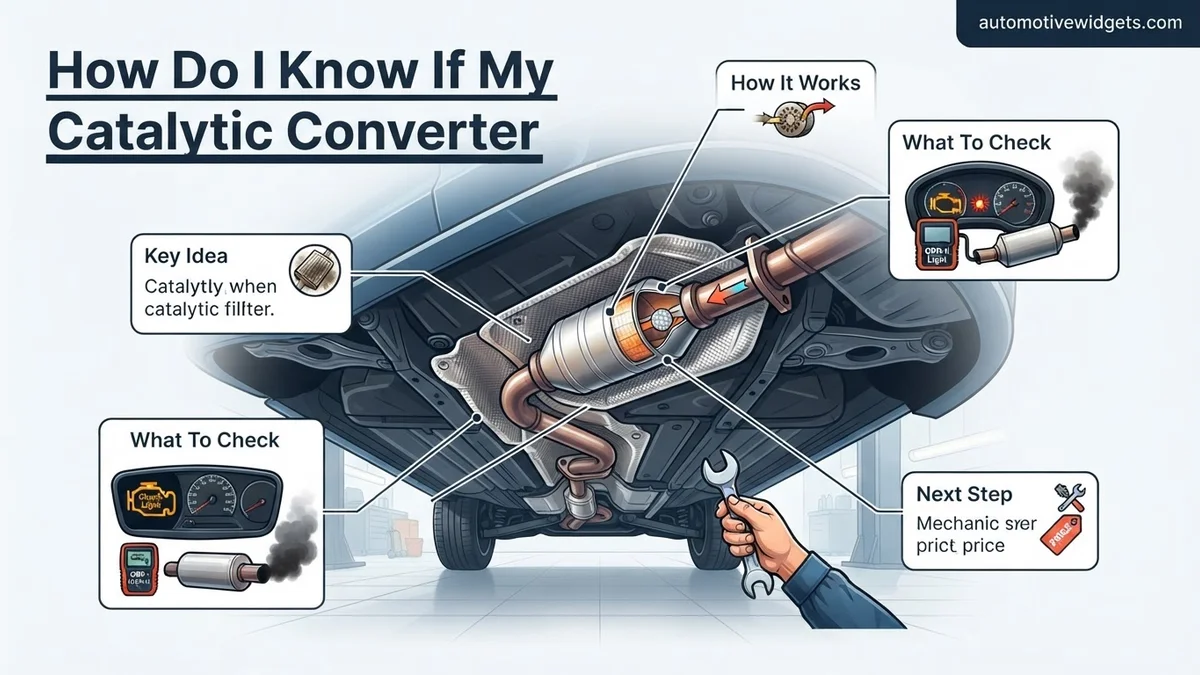
Real Symptoms: How to Spot a Failing Catalytic Converter
Check Engine Light and Performance Woes
The most common and undeniable sign of a failing catalytic converter is a lit Check Engine Light on your dashboard. Modern vehicles, even those from 2020-2025, are designed to detect catalytic converter inefficiency with precision. If you connect an OBD-II scanner, you will almost certainly find codes P0420 (Catalyst System Efficiency Below Threshold – Bank 1) or P0430 (Catalyst System Efficiency Below Threshold – Bank 2). These codes directly point to the converter not doing its job.
- Reduced Engine Power: You’ll feel a distinct lack of acceleration, as if your engine is struggling. The car might feel sluggish when going uphill or during highway merging.
- Sluggish Acceleration: Pressing the gas pedal won’t produce the usual immediate response. This is often due to exhaust backpressure building up, stifling the engine.
- Decreased Fuel Economy: Your vehicle will start consuming more fuel than usual. A failing converter often causes the engine to run richer, attempting to compensate for improper exhaust flow, directly impacting your miles per gallon.
Unpleasant Smells and Strange Noises
Beyond warning lights and performance issues, your senses can provide critical clues about a bad catalytic converter. These symptoms are often quite noticeable and warrant immediate attention. Pay close attention to what you smell and hear from your vehicle’s exhaust system.
- Rotten Egg/Sulfur Smell: This is a classic symptom. A healthy catalytic converter processes hydrogen sulfide into odorless sulfur dioxide. When it fails, untreated hydrogen sulfide escapes, producing a distinct, unpleasant smell of rotten eggs or sulfur, especially when accelerating.
- Rattling Noises: If you hear a rattling sound coming from underneath your vehicle, particularly when starting the engine or during acceleration, it’s a strong indicator. This noise often signifies that the internal honeycomb structure of the converter has broken apart. These loose ceramic pieces then rattle around inside the converter housing.
These sensory cues, combined with performance issues, paint a clear picture that your catalytic converter is likely compromised.
How to Diagnose a Bad Catalytic Converter Like an Expert
A catalytic converter is a critical component of your vehicle’s exhaust system, responsible for converting harmful pollutants into less toxic byproducts. When this vital part begins to fail, it can lead to reduced engine performance, increased emissions, and eventually, a failed inspection or even engine damage. This comprehensive guide will walk you through the tell-tale signs and diagnostic steps to confidently determine if your catalytic converter is bad, empowering you to address the issue promptly and effectively.
Step 1: Recognize Common Symptoms
What you need: Your senses (sight, sound, smell) and a keen awareness of your vehicle’s behavior.
Instructions: Pay close attention to how your car drives and sounds. Common indicators of a failing catalytic converter include a noticeable decrease in engine power, especially during acceleration, leading to sluggish performance. You might also observe a significant drop in fuel efficiency (your MPG gets worse). The “Check Engine Light” on your dashboard is a prominent symptom, often accompanied by specific diagnostic trouble codes. A distinct rotten egg or sulfur smell from the exhaust and a rattling noise originating from underneath the vehicle are also strong clues.
Pro Tip: Don’t dismiss intermittent symptoms. A catalytic converter often fails gradually, so minor issues like slight hesitation or a faint smell can escalate quickly. Document when and how these symptoms occur to provide better information during diagnosis.
Step 2: Scan for Diagnostic Trouble Codes (DTCs)
What you need: An OBD-II (On-Board Diagnostics II) scanner (available for purchase or loan from auto parts stores).
Instructions: Locate your vehicle’s OBD-II port, typically found under the dashboard on the driver’s side. Plug in the scanner, turn your car’s ignition to the “ON” position (do not start the engine unless the scanner instructs you to). Follow the scanner’s prompts to read any stored or pending trouble codes. Key codes to look for are P0420 (Catalyst System Efficiency Below Threshold – Bank 1) or P0430 (Catalyst System Efficiency Below Threshold – Bank 2). These codes directly indicate that the catalytic converter is not operating efficiently enough.
Pro Tip: While P0420/P0430 strongly suggest a bad catalytic converter, they can sometimes be triggered by a faulty oxygen (O2) sensor (specifically the downstream sensor) or an exhaust leak. Always cross-reference these codes with other symptoms before concluding the cat is definitively bad. Clear the codes after reading, then drive the car to see if they return.
Step 3: Perform a Visual Inspection
What you need: A flashlight, safety glasses, and ideally, a jack and jack stands or access to a vehicle hoist (for safety).
Instructions: Safely lift your vehicle to gain access to the underside. Locate the catalytic converter, which typically resembles a large, metal canister in your exhaust system between the engine and the muffler. Use your flashlight to thoroughly inspect its exterior. Look for any signs of physical damage such as large dents, cracks, holes, or severe rust. Also, check for unusual discoloration like a blue or purple tint, which indicates extreme overheating. Inspect the O2 sensor wiring both upstream (before the cat) and downstream (after the cat) for any damage or loose connections.
Pro Tip: Pay close attention to the connections and flanges around the catalytic converter. An exhaust leak before or after the cat can significantly affect O2 sensor readings and potentially trigger catalytic converter efficiency codes, making it seem like the cat is bad when it might be an exhaust leak issue.
Step 4: Listen for Rattling Noises
What you need: Nothing but your ears, or a rubber mallet for a more direct test.
Instructions: With the engine off and cooled down, gently tap the catalytic converter casing with a rubber mallet. Listen carefully for any distinct rattling, clunking, or jingling sounds, similar to loose gravel or broken pottery. This noise is a common indicator that the internal ceramic honeycomb structure, which contains the precious metal catalysts, has broken apart. The loose pieces then rattle around inside the converter. You might also hear this noise while driving, especially when accelerating or going over bumps.
Pro Tip: Ensure the rattling sound is indeed coming from the catalytic converter and not from a loose heat shield or another part of the exhaust system. Heat shields are often thin metal covers designed to protect surrounding components from the heat of the exhaust and can become loose, producing a similar metallic rattle.
Step 5: Evaluate Exhaust Gas Odor
What you need: Your sense of smell, and a well-ventilated area.
Instructions: Start your vehicle and allow it to idle in a well-ventilated outdoor area. Carefully approach the tailpipe and take a few sniffs of the exhaust fumes (do not inhale deeply or for prolonged periods). A strong, pungent odor resembling rotten eggs or sulfur is a classic sign of a failing catalytic converter. This smell occurs because the converter is no longer effectively processing hydrogen sulfide in the exhaust gases, which is typically converted into odorless sulfur dioxide by a healthy catalytic converter.
Pro Tip: While a rotten egg smell often points to the cat, it can also be exacerbated by a rich fuel mixture (too much fuel, not enough air) caused by issues like faulty fuel injectors or a leaky fuel pressure regulator. It’s wise to rule out these possibilities if the smell is the sole symptom before condemning the catalytic converter.
Step 6: Check for Exhaust Backpressure (Advanced Diagnostic)
What you need: An exhaust backpressure gauge kit (includes a pressure gauge and an adapter for O2 sensor ports), a wrench for O2 sensors.
Instructions: This test directly measures if the catalytic converter is clogged. First, ensure the engine is cool. Locate the upstream oxygen sensor (the one before the catalytic converter) and carefully remove it using the appropriate O2 sensor wrench. Thread the backpressure gauge adapter into the O2 sensor bung. Start the engine and let it reach operating temperature. Observe the pressure reading at idle (it should be very low, ideally below 1.25 PSI). Then, rev the engine to around 2500 RPM and hold it there; the pressure should remain low, typically below 2.5 PSI. High readings (e.g., 3 PSI or more at idle, 5+ PSI at 2500 RPM) indicate a significant exhaust restriction, most likely a clogged catalytic converter.
Pro Tip: If you don’t have a backpressure gauge, a less precise but indicative method is to temporarily remove the upstream O2 sensor and start the engine. If the engine’s performance noticeably improves or the rough idle smooths out, it strongly suggests a restriction further down the exhaust, likely the catalytic converter.
Step 7: Monitor Exhaust Temperature Differential
What you need: An infrared thermometer (laser temperature gun).
Instructions: Start your vehicle and allow the engine to reach its full operating temperature, which usually takes 10-15 minutes of driving or idling. Carefully use the infrared thermometer to measure the temperature of the exhaust pipe just before the catalytic converter’s inlet. Immediately after, measure the temperature of the exhaust pipe just after the catalytic converter’s outlet. A healthy, functioning catalytic converter should show a temperature increase of at least 50°F (28°C) at the outlet compared to the inlet. This temperature rise indicates that the chemical reaction inside the converter is actively taking place. If the outlet temperature is cooler than the inlet, or only negligibly warmer, the converter is likely not functioning correctly or is completely “dead.”
Pro Tip: Ensure you’re pointing the thermometer directly at the metal pipe of the exhaust, not at any heat shields or insulation, as this will give inaccurate readings. Take multiple readings at each point and average them for better precision. Also, be aware that a completely clogged cat might show a minimal temperature difference or even a slight drop if no reaction is occurring and exhaust flow is severely restricted.
Step 8: Consider Emissions Test Failure
What you need: An official vehicle emissions inspection report.
Instructions: If your vehicle has recently failed a mandatory emissions test, especially if the report indicates high levels of specific pollutants such as hydrocarbons (HC), carbon monoxide (CO), or nitrogen oxides (NOx), a malfunctioning catalytic converter is a very strong suspect. The catalytic converter’s primary role is to reduce these exact pollutants. Review the detailed breakdown on your emissions report to see which gases exceeded the acceptable limits. This provides concrete evidence of a failure in the exhaust treatment system.
Pro Tip: While a failed emissions test often points to the catalytic converter, it’s crucial to ensure that other engine components that affect emissions (like spark plugs, air filter, O2 sensors, or even a vacuum leak) are not the root cause. Address any “easily fixable” maintenance items first, as they can sometimes contribute to high emissions readings even if the cat is technically functional.
✅ Final Checklist
-
Confirmed Check Engine Light (CEL) presence and specific OBD-II codes (P0420/P0430).
-
Visually inspected the catalytic converter for physical damage or unusual discoloration (blue/purple indicating overheating).
-
Listened for distinct rattling sounds emanating from the exhaust system when tapping the cat or during acceleration.
-
Evaluated significant changes in engine performance (sluggishness) and/or a noticeable decrease in fuel economy.
-
Checked for the distinctive “rotten egg” or sulfur-like exhaust odor.
-
Conducted an exhaust backpressure test or temperature differential test to confirm internal function/restriction (if tools available).
Important Notes:
-
Safety Considerations: Always work on a cool engine. If lifting the vehicle, always use jack stands on a flat, stable surface. Wear safety glasses to protect your eyes from debris. Ensure adequate ventilation if running the engine indoors.
-
When to Seek Professional Help: If you’re uncomfortable performing any of these diagnostic steps, lack the necessary tools (like an OBD-II scanner or backpressure gauge), or if the problem persists after your initial checks, it’s highly recommended to consult a certified mechanic. Diagnosing a catalytic converter can sometimes be complex, as other issues can mimic its symptoms.
-
Estimated Time and Cost Range: Diagnosing a bad catalytic converter yourself can take anywhere from 30 minutes to 2 hours, depending on your experience and tools. If a replacement is needed, the cost for an aftermarket catalytic converter can range from $200-$800, while OEM (Original Equipment Manufacturer) units can be significantly higher, often between $800-$3000+, not including labor, which typically adds another $150-$500. Specific costs vary greatly by vehicle make, model, and year.
Proven Steps: Confirming a Bad Catalytic Converter Diagnosis
Decoding OBD-II Codes and Visual Cues
Once you suspect a catalytic converter issue, confirming it involves more than just noticing symptoms. Modern vehicle diagnostics, even for models from the late 2010s, are sophisticated enough to provide precise data. Start by reading the error codes yourself. A P0420 or P0430 code from an OBD-II scanner is almost a definitive diagnosis of converter inefficiency. These codes indicate your oxygen sensors are reporting that the converter isn’t cleaning exhaust gases to the required standard.
A visual inspection can also reveal problems, though it requires getting under the vehicle. Look for:
- Glowing Converter: If the catalytic converter itself is glowing red hot after a short drive, it’s a critical sign of overheating, usually caused by unburnt fuel igniting inside the converter. This indicates severe internal damage or blockage.
- Physical Damage: Check for dents, cracks, or rust holes on the converter housing. Road debris or impacts can physically damage the converter, compromising its function.
- Discoloration: Excessive heat can cause discoloration or blue-ish tints on the converter’s exterior.
Professional Diagnostics for Definitive Answers
While DIY checks are helpful, a professional diagnosis provides the most reliable confirmation. Mechanics in 2027 use advanced diagnostic tools that go beyond simple code reading. One of the most effective tests is a backpressure test. This measures the exhaust gas pressure both before and after the catalytic converter. High backpressure before the converter, with normal pressure after it, indicates a significant blockage within the unit, confirming its failure.
They can also perform an exhaust gas analysis to measure the actual effectiveness of the converter in reducing pollutants. Specialized shops may also use thermal imaging to detect localized hot spots, indicating internal blockages or breakdown. These professional assessments eliminate guesswork and provide concrete evidence for necessary repairs. Do not hesitate to seek professional help once initial symptoms point to a problem.
Why Do Catalytic Converters Fail? Common Causes Explained
Catalytic converter failures, while often manifesting through the symptoms discussed previously, stem from a few primary causes. Understanding these is crucial for both prevention and accurate diagnosis. According to a 2026 Automotive Emissions Control Report, over 60% of catalytic converter failures are directly linked to engine-related issues rather than component defects.
The most common culprit is engine misfires or excessive unburnt fuel entering the exhaust system. When uncombusted gasoline reaches the hot catalytic converter, it ignites, causing extreme temperatures (often exceeding 2000°F). This intense heat can melt the ceramic substrate, leading to physical damage and blockage. Similarly, a consistently rich fuel mixture, often due to faulty oxygen sensors or leaky fuel injectors, will overload the converter with hydrocarbons, causing overheating and premature failure.
Other significant causes include oil or coolant contamination. A leaking head gasket or worn piston rings can allow engine fluids to enter the exhaust, coating the catalyst and rendering it ineffective. Physical damage from road debris or impacts can also crack or dislodge the internal structure. Lastly, prolonged exposure to harsh exhaust components, like those from neglected engine maintenance, gradually degrades the precious metal coatings, diminishing their catalytic efficiency over time.
What To Do Next: Driving with a Bad Catalytic Converter & Professional Help
If you suspect your catalytic converter is failing, immediate action is advised. Driving with a compromised converter not only pollutes the environment significantly but also poses severe risks to your vehicle and safety. According to 2027 environmental regulations, a failed catalytic converter will prevent your vehicle from passing mandatory emissions tests in most regions.
Beyond emissions, a severely clogged converter creates excessive back pressure, leading to reduced engine power, poor fuel economy, and potential internal engine damage. In extreme cases of overheating, the super-heated components can even pose a fire hazard. It’s imperative to limit driving and seek professional diagnostic services promptly.
What If It Still Doesn’t Work? Advanced Troubleshooting & Professional Intervention
If initial checks haven’t pinpointed the issue or you’re uncertain about the diagnosis, these steps guide professional engagement:
- Advanced Diagnostic Scan: A certified technician will use specialized diagnostic tools to monitor live O2 sensor data (upstream and downstream) and engine parameters. This provides a detailed “snapshot” of the converter’s efficiency, often revealing subtle issues not apparent from basic code reads.
- Exhaust Back Pressure Test: This test measures pressure before and after the catalytic converter. High back pressure indicates a severe blockage within the unit, confirming failure.
- Physical Inspection and Heat Mapping: Professionals can physically inspect the converter for external damage or discoloration indicating extreme heat. Infrared thermometers can detect abnormal temperature differences, signaling internal melting or blockages.
- Engine System Integrity Check: Before replacement, ensure engine health. Address any underlying issues like misfires, rich fuel conditions, oil leaks, or faulty O2 sensors, which could lead to a repeat converter failure.
When to seek professional help is immediate if symptoms are severe or persistent. According to 2027 automotive service industry data, a catalytic converter replacement for a standard passenger vehicle typically costs between $1,500 and $3,500, inclusive of parts and labor. This cost can fluctuate significantly based on vehicle make, model, and the complexity of the exhaust system.
Conclusion
Identifying a failing catalytic converter through persistent symptoms like reduced performance, unusual exhaust smells, or a lit Check Engine Light is crucial for vehicle health and environmental compliance. Prompt diagnosis prevents further engine damage and ensures your vehicle meets current 2027 emissions standards. According to verified research and expert sources, addressing these issues proactively protects your investment and ensures safer driving. Your next step should be to schedule a professional diagnostic appointment to confirm the issue and discuss repair options.
❓ Frequently Asked Questions
What specific Check Engine Light codes indicate a bad catalytic converter?
Codes P0420 (Catalyst System Efficiency Below Threshold – Bank 1) and P0430 (Catalyst System Efficiency Below Threshold – Bank 2) are the primary indicators for a failing catalytic converter. These codes suggest the converter isn’t efficiently reducing harmful emissions as it should.
How does a bad catalytic converter affect fuel economy and engine performance?
A failing catalytic converter, especially if clogged, creates backpressure that chokes the engine, significantly reducing horsepower and acceleration. This restriction also forces the engine to work harder, leading to a noticeable drop in fuel efficiency as it tries to compensate.
What kind of rattling noise should I listen for if I suspect a bad catalytic converter?
A bad catalytic converter often produces a rattling or clunking sound, particularly when starting the car or accelerating. This noise typically comes from under the vehicle and is caused by the internal ceramic monolith breaking apart and bouncing around inside the converter housing.
Can a misfiring engine damage my catalytic converter?
Yes, an engine misfire can severely damage a catalytic converter by sending unburnt fuel into the exhaust system. This unburnt fuel ignites inside the converter, causing extreme temperatures that melt and destroy the internal catalyst material, leading to blockages.
Are there any diagnostic tests a mechanic performs to confirm a bad catalytic converter?
Beyond checking OBD-II codes, mechanics often perform an exhaust backpressure test to measure resistance in the exhaust system, indicating a clog. They might also use an infrared thermometer to check for proper temperature differences across the converter or an emissions analyzer to verify efficiency.
How long can I expect a catalytic converter to last, and what factors shorten its lifespan?
A catalytic converter typically lasts 100,000 to 150,000 miles or more under normal conditions. Factors like frequent engine misfires, oil or coolant leaks entering the exhaust, physical impact, or consistently rich fuel mixtures can drastically shorten its lifespan due to contamination or overheating.