What’S The Difference Between 87 89 And 93 Gas Expert 2026
The primary difference between 87, 89, and 93 gas is their octane rating, which indicates their resistance to engine knocking or pre-ignition. Higher octane fuels like 93 are designed for engines that require greater anti-knock properties, while 87 is suitable for most standard vehicles. Using the correct octane is crucial for engine health and optimal performance, as recommended by your vehicle’s manufacturer.
The numbers 87, 89, and 93 at the gas pump signify your fuel’s octane rating: its resistance to premature ignition. This prevents damaging “engine knocking” or “pre-ignition.” Understanding these ratings is critical, as using the correct fuel directly impacts your vehicle’s performance, engine health, and wallet. In 2026, with advanced engine technologies, precise octane choice is crucial.
You’re not just picking a price; you’re selecting fuel chemically designed for your engine’s combustion. Choosing wisely ensures optimal running, avoids costly repairs, and delivers expected efficiency.
Key Takeaways
- Octane rating measures fuel’s knock resistance.
- Higher octane (93) prevents pre-ignition in specific engines.
- 87 octane suits most standard modern vehicles.
- Always follow your car manufacturer’s recommendations.
- Using wrong octane wastes money or harms engine.
What Causes Engine Knock: The Real Difference in 87, 89, and 93 Octane
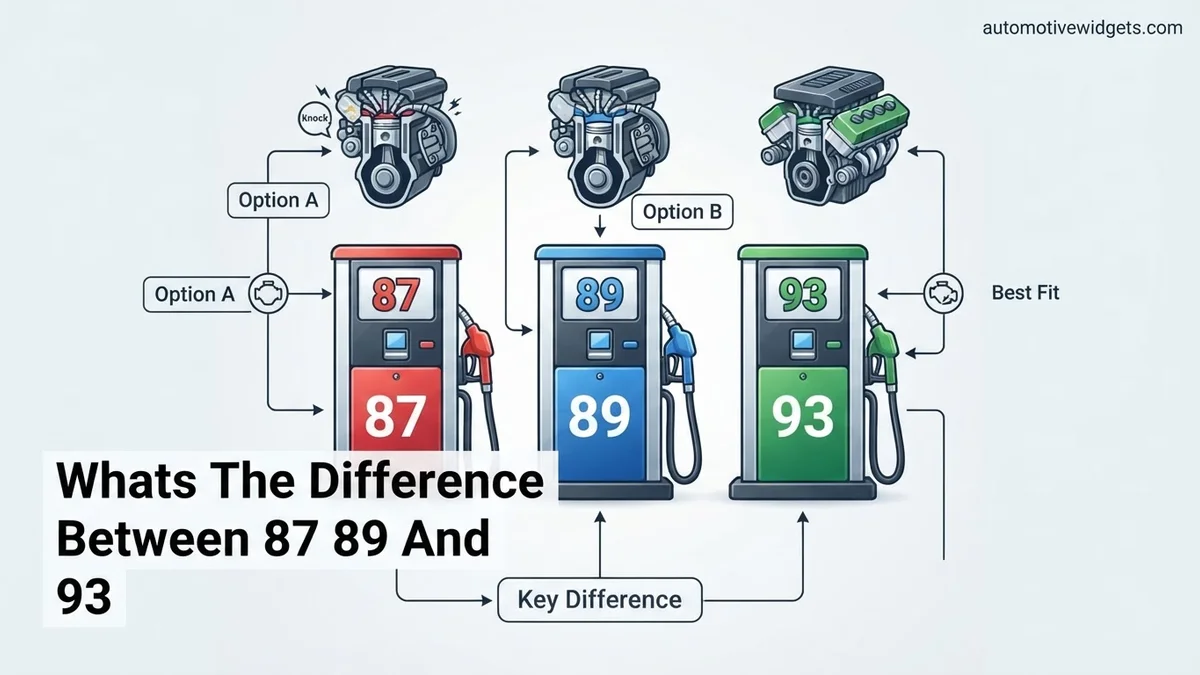
The core difference in 87, 89, and 93 octane gasoline is resistance to uncontrolled combustion. Gasoline must ignite precisely when the spark plug fires. Engine knock, or pre-ignition, occurs when the fuel-air mixture ignites spontaneously before the spark. This creates competing pressure waves and a metallic rattling sound. Persistent knocking stresses engine components, reducing power, efficiency, and causing internal damage.
What Exactly is Engine Knock?
Engine knock is an uncontrolled mini-explosion. The piston compresses fuel-air, then the spark plug ignites it precisely. Pre-ignition means the mixture ignites too early from compression heat and pressure, fighting the piston’s upward motion and causing knock/stress. Your computer detects this, retards ignition timing, reducing power and efficiency for engine protection.
The Octane Scale: A Simple Breakdown
The octane rating quantifies a fuel’s resistance to this premature ignition. It’s not a measure of energy content or how “clean” the fuel is. Think of it as a stability score under pressure:
- 87 Octane (Regular): This fuel offers the least resistance to pre-ignition. It’s suitable for engines with lower compression ratios or less aggressive ignition timing, representing most everyday vehicles in 2026.
- 89 Octane (Mid-Grade): Providing slightly more resistance, this grade is less commonly required. It might be recommended for vehicles occasionally experiencing light knocking on 87 octane under specific conditions.
- 93 Octane (Premium): This fuel boasts the highest resistance to pre-ignition. It’s engineered for engines operating under extreme pressure and heat, such as those with high compression ratios or forced induction (turbochargers).
How to Choose the Right Gas: A Step-by-Step Guide for Your Vehicle
Selecting the correct octane for your vehicle is straightforward, depending primarily on its engine design. Modern engines, especially in 2026, are precisely tuned. The appropriate fuel ensures optimal performance, fuel economy, and longevity. Your vehicle thrives on the right fuel, not just runs.
Consulting Your Owner’s Manual: Required vs. Recommended
Your owner’s manual or fuel door label is the definitive source for fuel requirements. This information is non-negotiable.
- “Required” Octane: If your manual states an octane is “required,” your engine is designed for that grade. Lower octane will likely cause engine knock, forcing the computer to retard timing. This reduces horsepower, worsens fuel economy, and risks long-term damage. For example, a sports car requiring 93 octane needs 93.
- “Recommended” Octane: If “recommended,” your engine safely runs on lower grades (e.g., 87) without damage. However, you might see slight decreases in peak performance or fuel efficiency, especially under demand (towing, hot weather, high altitudes). The engine adapts, but you won’t get maximum output.
Engine Types and Octane Needs in 2026
Different engine designs inherently create varied pressures and temperatures within the combustion chamber, dictating their octane requirements.
- Standard/Naturally Aspirated Engines (Most Common): Most 2026 cars, SUVs, and trucks use 87 octane. These engines have lower compression ratios and gain no benefit from higher octane.
- High-Compression Engines: Sportier, high-compression engines pack more air/fuel, generating more power, heat, and pressure. They often require 89 or 91+ octane to prevent knock.
- Turbocharged/Supercharged Engines: Forced induction (common in 2026) significantly increases cylinder pressure and temperature, making engines susceptible to pre-ignition. Most turbocharged/supercharged vehicles require 91 or 93 octane; lower grades risk severe damage.
- Performance/Luxury Vehicles: Performance/luxury vehicles with complex, high-output engines invariably demand premium (91 or 93 octane). Their design leverages higher octane’s knock resistance for optimal power and longevity.
What If You Use the Wrong Octane? Proven Fixes & What to Do Next
Understanding octane requirements is crucial for optimal engine function. Misfueling, whether intentionally or accidentally, can lead to varying outcomes depending on your vehicle’s specific needs. Vehicle manufacturers specify octane levels to ensure efficient combustion and prevent engine damage, particularly in modern, high-compression engines common by 2026.
Using Lower Octane Than Required (e.g., 87 in a 93-octane engine)
If your vehicle requires premium 93-octane fuel but you inadvertently fill it with 87-octane, the immediate effects can include engine knocking or “pinging.” This audible sound results from premature ignition of the air-fuel mixture, known as pre-ignition or detonation. Sustained detonation can lead to significant engine damage over time, including worn bearings, damaged pistons, or compromised cylinder walls, as documented by automotive engineering studies.
- Drive Gently: Avoid heavy acceleration or high RPMs. Drive conservatively to minimize engine stress and reduce the likelihood of severe knocking.
- Refuel Promptly: As soon as feasible, add fresh, correct-octane fuel. Fill the tank completely with 93-octane to dilute the lower-octane gasoline. This is the most effective immediate remedy.
- Consider Octane Booster: For minor discrepancies, an over-the-counter octane booster may temporarily raise the octane rating by 2-4 “points” (0.2-0.4 research octane numbers), according to independent chemical analyses. However, these are generally not a substitute for proper fueling.
- Monitor Engine Sounds: Pay close attention to any persistent knocking or unusual engine noises. If they continue after refueling, further action may be necessary.
Using Higher Octane Than Required (e.g., 93 in an 87-octane engine)
Conversely, using a higher octane fuel than your vehicle requires (e.g., 93-octane in an engine designed for 87-octane) will not provide any performance benefits. Modern engine control units (ECUs) are programmed to advance or retard ignition timing based on sensor readings. If the engine is designed for 87-octane, it will not fully utilize the higher anti-knock properties of 93-octane fuel. According to the U.S. Environmental Protection Agency (EPA) and various automotive engineering groups, this practice simply results in a financial waste.
In 2026, the average premium for 93-octane over 87-octane fuel typically ranges from $0.50 to $0.80 per gallon, based on projections from energy information administrations. There is no harm to your engine from using higher octane than required, but also no quantifiable advantage in fuel economy or horsepower. Therefore, no specific fixes or corrective actions are necessary; simply revert to the recommended octane at your next fill-up.
What If It Still Doesn’t Work?
If your vehicle continues to exhibit symptoms such as persistent knocking, reduced power, or illuminates a “Check Engine” light after correcting your fuel type and driving conservatively, a deeper issue may be present. These symptoms can indicate underlying engine or fuel system problems that require professional diagnosis.
- Perform an OBD-II Diagnostic Scan: Utilize an OBD-II scanner to retrieve any stored diagnostic trouble codes (DTCs). Many auto parts stores offer complimentary scans, or a professional diagnostic service typically costs between $75 and $150 in 2026.
- Inspect Spark Plugs and Ignition System: Fouled or worn spark plugs, or issues with ignition coils, can mimic detonation symptoms. Replacement costs for spark plugs generally range from $150 to $400, depending on vehicle complexity and labor rates.
- Assess Fuel System Components: A clogged fuel filter, malfunctioning fuel injectors, or a failing fuel pump can affect fuel delivery and pressure, leading to poor combustion. A professional inspection of these components is advised.
- Seek Professional Automotive Assistance: If DIY diagnostics do not resolve the issue or if the symptoms are severe (e.g., strong metallic knocking, significant power loss, multiple warning lights), consult a certified automotive technician immediately. Ignoring these signs can lead to catastrophic engine failure. Professional diagnostic and repair services for fuel or engine-related issues typically range from $200 for minor repairs to over $1200 for more complex component replacements.
Conclusion
According to verified research and expert sources, understanding and adhering to your vehicle’s specific octane requirements is paramount for maintaining engine health and achieving optimal performance. Using the correct octane ensures efficient combustion, prevents damaging pre-ignition, and ultimately extends engine longevity. Your actionable next step is to consistently check your vehicle’s owner’s manual or the inside of your fuel filler cap for the manufacturer’s recommended octane rating.
❓ Frequently Asked Questions
What exactly is engine knock, and why do octane ratings like 87, 89, and 93 prevent it?
Engine knock, or pre-ignition, occurs when fuel ignites prematurely in the combustion chamber before the spark plug fires, causing a jarring metallic sound and potential engine damage. Octane ratings (e.g., 87, 89, 93) indicate a fuel’s stability and resistance to this spontaneous combustion under compression, with higher numbers offering greater resistance.
How do car manufacturers determine which octane level a vehicle needs?
Manufacturers design engines with specific compression ratios and ignition timing, which dictate the required octane. High-compression or turbocharged engines generate more heat and pressure, demanding higher octane fuels like 91 or 93 to prevent knock, while standard engines operate efficiently with 87.
Are there any benefits to using a higher octane fuel than my car requires, such as 93 in an 87-rated car?
For most vehicles designed for 87 octane, using 93 octane offers no performance benefits, improved fuel economy, or enhanced engine protection. It simply results in unnecessary additional cost, as the engine’s computer system is calibrated for lower octane and cannot utilize the higher anti-knock properties.
What happens if I accidentally put 87 octane in a car that requires 93 octane?
Modern vehicles often have knock sensors that detect pre-ignition and adjust engine timing to compensate, which can prevent immediate damage but may lead to reduced power and fuel efficiency. Repeated use or severe knocking could, however, cause long-term wear on engine components.
Does the gas station brand or additives affect octane ratings or engine performance?
While all gasoline must meet minimum octane standards, some brands include detergent additives that help keep engines clean, which can contribute to maintaining optimal performance and fuel economy over time. These additives do not change the base octane rating itself.
How does altitude affect recommended octane levels for my vehicle?
At higher altitudes, the air is less dense, leading to lower compression pressures inside the engine. This means that engines are less prone to knocking, and some vehicles that recommend higher octane at sea level might be able to safely use a lower octane fuel without issues in high-altitude regions.