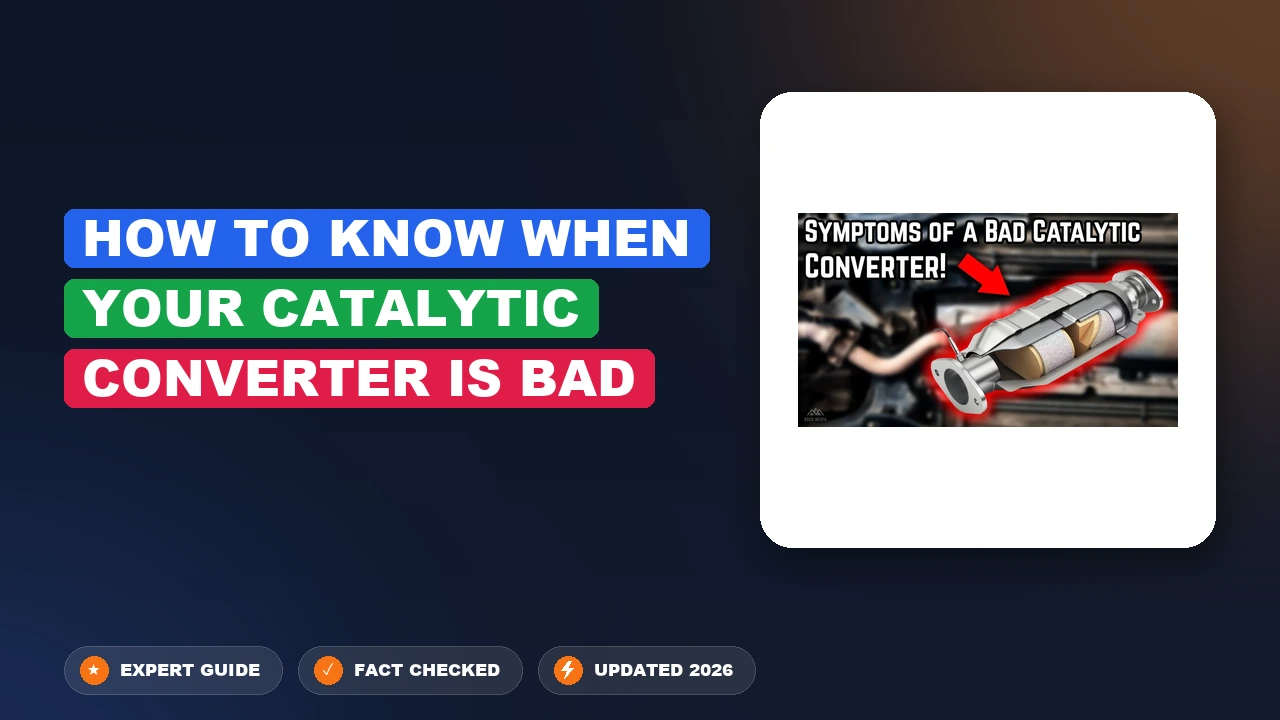
How to Know When Your Catalytic Converter Is Bad 2026 Guide
Recognizing how to know when your catalytic converter is bad saves your engine from severe damage and expensive repairs. Key warning signs include a sulfur rotten egg smell, sluggish acceleration, and the dreaded check engine light. Catching these symptoms early prevents complete exhaust blockage.
A failing catalytic converter shows distinct warning signs like a rotten egg smell, sluggish acceleration, a sudden drop in fuel economy, and a persistent check engine light. If your vehicle struggles to maintain highway speeds or fails a smog check, the exhaust component is likely clogged or damaged.
Diagnosing these issues early in 2026 saves you from complete engine stalls and costly downstream repairs. Knowing the precise symptoms and using simple diagnostic techniques helps you catch a bad converter before it strands you on the road.
Key Takeaways
- A sulfur or rotten egg smell from the exhaust indicates a failing unit.
- Sluggish acceleration and reduced fuel economy point to a restricted exhaust flow.
- The Check Engine Light often triggers the common P0420 efficiency code.
- A metallic rattling noise underneath the car signals broken internal honeycomb meshes.
- Testing exhaust heat with an infrared thermometer pinpoints a clogged converter.
What Causes a Catalytic Converter to Fail and Breakdown
Unburnt Fuel and Engine Misfires
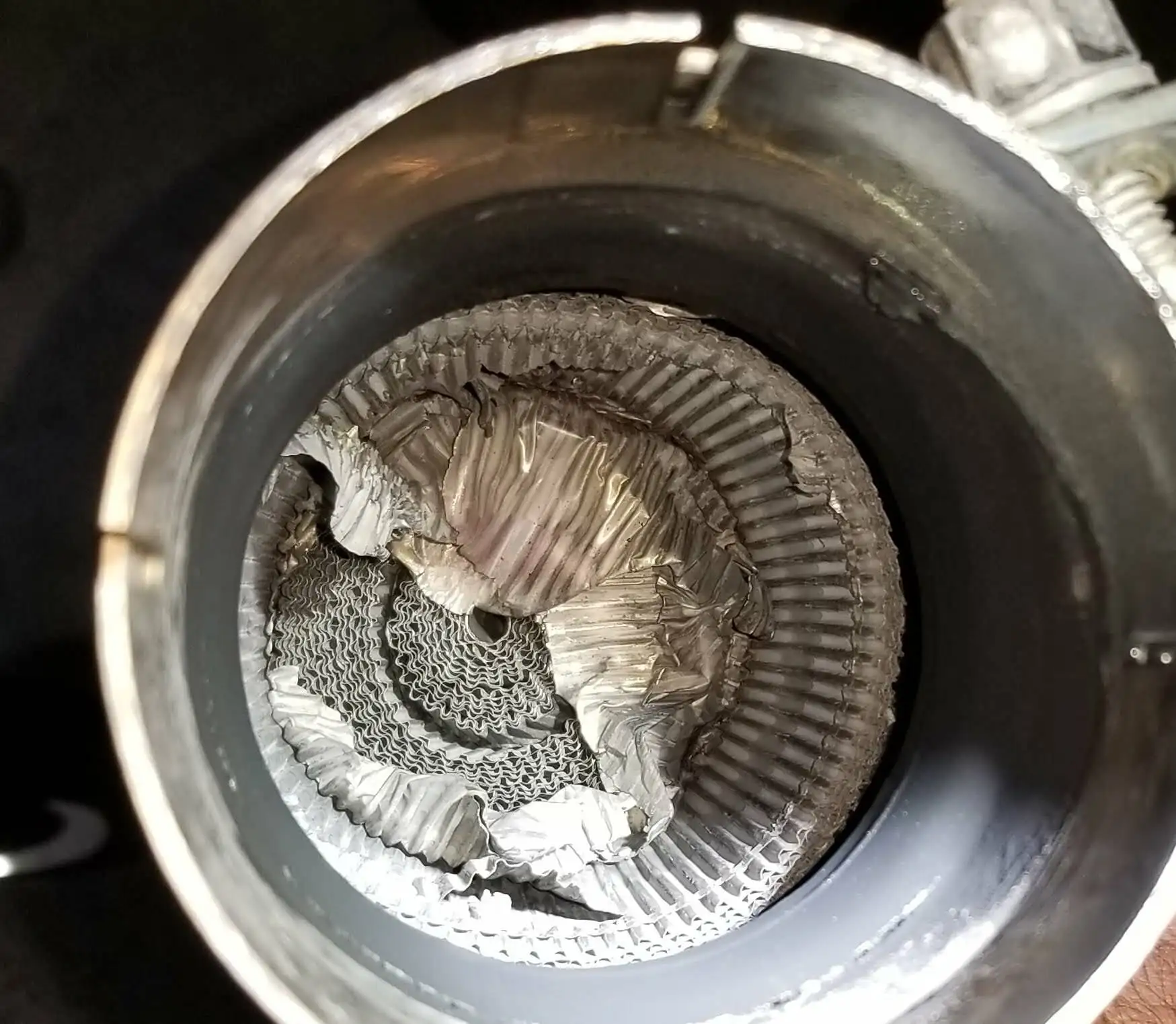
Raw fuel leaking into your exhaust system is the number one killer of catalytic converters. When a spark plug misfires or a fuel injector sticks open, unburnt gasoline reaches the hot honeycomb interior of the converter. The fuel ignites inside the unit, melting the precious metal structure and clogging the exhaust path.

Oil Contamination and Internal Aging
Internal engine leaks from worn piston rings or failing valve seals allow oil or coolant to enter the combustion chamber. These fluids burn and coat the catalyst with thick carbon deposits, effectively suffocating the component. Additionally, natural wear and thermal shock over 100,000 miles cause the internal ceramic substrate to crack and break apart.
How to Diagnose and Fix Failing Catalytic Converters Like an Expert
Your vehicle’s catalytic converter plays a vital role in reducing harmful emissions and keeping your engine running efficiently. When this crucial exhaust component begins to fail, it can severely impact your car’s performance, fuel economy, and environmental impact. This guide will walk you through the precise diagnostic process to determine if your catalytic converter is truly failing, saving you from unnecessary mechanic fees and guesswork.
Step 1: Check the Dashboard for Diagnostic Trouble Codes
What you need: An OBD-II diagnostic scanner, access to your vehicle’s driver-side dashboard port.
Instructions: Locate the OBD-II port typically found under the dashboard on the driver’s side of your vehicle. Plug your diagnostic scanner into this port and turn your ignition key to the ON position without starting the engine. Follow the scanner prompts to read any stored error codes. Pay special attention to codes starting with P0420 or P0430, which specifically indicate that the catalytic converter efficiency is below threshold on bank one or bank two. Record these codes for your records.
Pro Tip: Don’t just clear the codes and ignore them; if a P0420 code returns shortly after clearing, you likely have a legitimate hardware failure rather than a random computer glitch.
Step 2: Perform a Visual Inspection of the Exhaust System
What you need: A flashlight, safety glasses, and a reliable car jack with jack stands (never rely solely on a hydraulic jack).
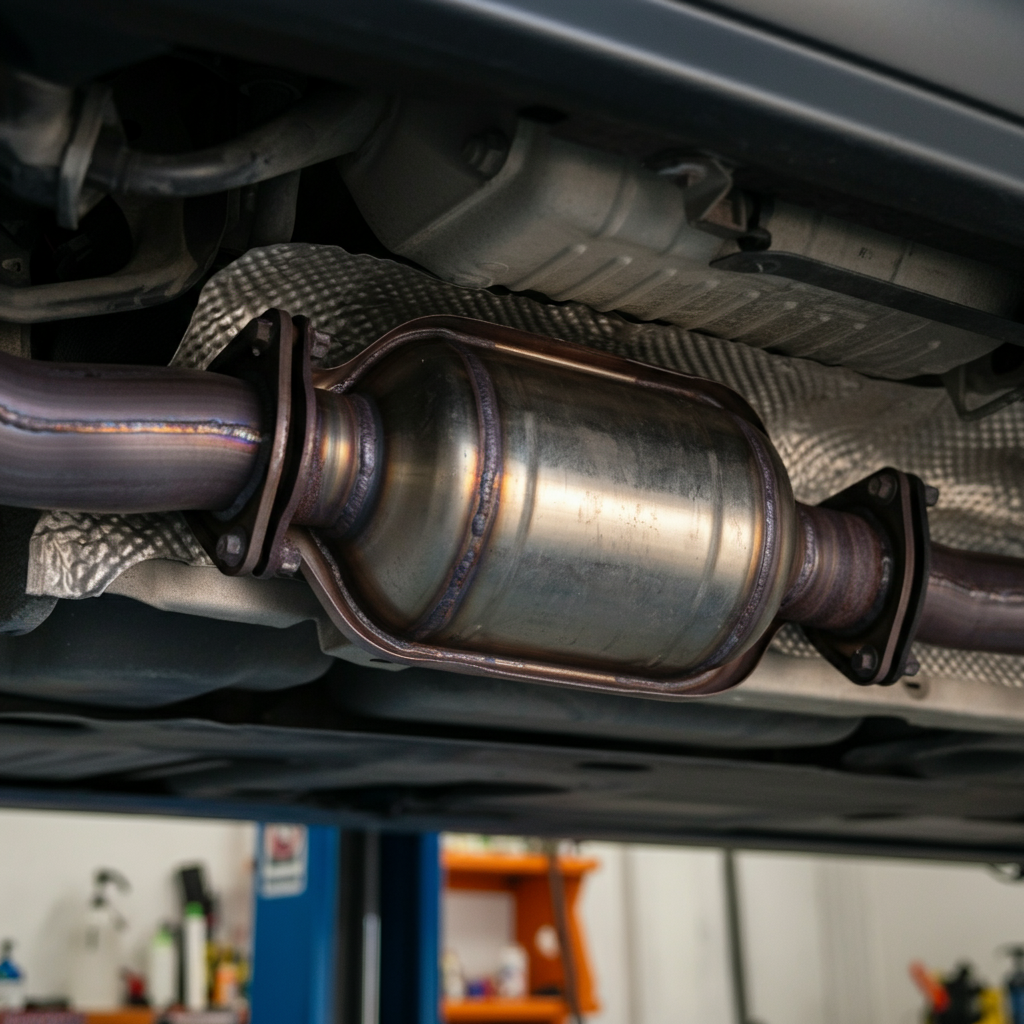
Instructions: Safely elevate the vehicle using jack stands and secure the wheels. Slide underneath with your flashlight and inspect the entire length of the exhaust system, focusing heavily on the catalytic converter housing. Look for physical damage such as severe dents, rust holes, deep cracks, or a discolored, dark blueish tint caused by extreme overheating. Check the hanging brackets and flanges to ensure the unit isn’t rattling against the vehicle frame, which can cause internal ceramic honeycomb breakage.
Pro Tip: Never touch the exhaust components until the car has been completely turned off for at least two hours, as exhaust pipes reach temperatures exceeding 1000 degrees Fahrenheit.
Step 3: Evaluate Engine Performance and Drivability Symptoms
What you need: A notebook, a stretch of open road, and your attentive driving senses.
Instructions: Take your car for a brief test drive while closely monitoring how it responds to acceleration. A clogged or failing catalytic converter severely restricts exhaust flow, creating backpressure that chokes the engine. Notice if the car struggles to accelerate, hesitates when you press the gas pedal, or refuses to rev past 3,000 RPM. Pay attention to whether the vehicle feels unusually sluggish when going up steep hills or when carrying heavy passenger loads.
Pro Tip: If your car feels like it is towing an invisible anchor and tops out at a low maximum speed on the highway, a plugged converter is a prime suspect.
Step 4: Sniff Out Unusual Exhaust Odors
What you need: Your sense of smell and a well-ventilated outdoor workspace.
Instructions: With the engine running in an open, well-ventilated area (preferably outside), walk around the vehicle and pay close attention to the smell coming from the tailpipe. A failing catalytic converter cannot properly convert toxic sulfur gases into less offensive compounds, resulting in a distinct, pungent smell resembling rotten eggs or sulfur. This sulfurous odor is one of the most reliable telltale signs of internal converter degradation or a rich air-fuel mixture.
Pro Tip: A raw gasoline smell indicates an unburnt fuel issue that will quickly destroy a new catalytic converter, so always fix upstream misfires first.
Step 5: Measure Exhaust Backpressure Using a Pressure Gauge
What you need: An exhaust backpressure gauge kit, a wrench, and high-temperature thread sealant.
Instructions: Remove the upstream oxygen sensor located just before the catalytic converter. Thread the exhaust backpressure gauge adapter securely into the oxygen sensor port. Start the engine and let it idle, then record the pressure reading on the gauge. Next, rev the engine to approximately 2,500 RPM and note the pressure reading again. At idle, backpressure should ideally remain below 1.5 psi, and at 2,500 RPM, it should not exceed 3 psi. Readings significantly higher than these thresholds indicate a severely restricted or clogged converter.
Pro Tip: Be extremely careful not to cross-thread the delicate O2 sensor threads when installing the pressure gauge adapter into the exhaust manifold or pipe.
Step 6: Conduct a Temperature Differential Test with an Infrared Thermometer
What you need: A non-contact infrared thermometer gun.
Instructions: Start your vehicle and let it run at normal operating temperature for about 15 minutes. Safely aim your infrared thermometer at the exhaust pipe directly before the catalytic converter and take a temperature reading. Next, take a reading from the exhaust pipe directly after the converter. A healthy catalytic converter operates through chemical reactions that generate heat, meaning the outlet temperature should typically be at least 100 degrees Fahrenheit hotter than the inlet temperature. If the outlet temperature is cooler than or equal to the inlet temperature, the converter is inactive.
Pro Tip: If the converter body glows bright red or registers extremely high temperatures (over 1200 degrees), it is experiencing a thermal overload due to unburnt fuel burning inside the unit.
✅ Final Checklist
- OBD-II scanner checked for persistent P0420 or P0430 catalyst efficiency codes
- Exhaust system thoroughly inspected for physical dents, cracks, or loose internal components
- Drivability symptoms like acceleration hesitation and power loss evaluated during a test drive
- Tailpipe emissions checked for the distinct rotten egg sulfur odor
- Exhaust backpressure measured and confirmed to be within safe manufacturer limits
- Temperature differential tested using an infrared thermometer to verify internal chemical activity
Important Notes:
- Always wear safety glasses, gloves, and protective footwear when working underneath an elevated vehicle.
- If you suspect internal engine issues like oil burning or bad fuel injectors, seek professional diagnostic help to prevent destroying a replacement converter.
- Estimated diagnostic time: 1 to 2 hours. Professional replacement cost typically ranges from $1,000 to $2,500 depending on vehicle make and model.
Step-by-Step Guide to Diagnosing a Bad Catalytic Converter
Listen for Rattling Noises and Check for Odors
Start your car and idle in Park. If you hear a distinct metallic rattling sound from underneath the vehicle, the internal honeycomb mesh has likely broken apart. Next, step outside and smell the exhaust. A strong sulfur or rotten egg odor indicates the converter can no longer properly convert toxic hydrogen sulfide gases.
Perform the Infrared Temperature Test
A clogged converter restricts exhaust flow, creating extreme heat differences. Use an infrared thermometer to measure exhaust pipe temperatures:
- Bring your engine up to normal operating temperature.
- Measure the temperature of the exhaust pipe immediately before the catalytic converter.
- Measure the temperature of the exhaust pipe after the catalytic converter.
- A healthy converter should run noticeably hotter (roughly 100 to 300 degrees Fahrenheit higher) at the outlet than the inlet. If the outlet is cooler, or if the converter body glows dull red at night, the unit is severely clogged.
How to Fix or Replace a Faulty Catalytic Converter
Addressing a failing catalytic converter requires prompt attention to prevent complete exhaust blockage and engine stalling. According to automotive service data from 2026, professional replacement remains the definitive solution for a structurally damaged component. However, specific diagnostic steps determine whether a total replacement is mandatory.
Diagnostic Verification and Safety Checks
Before initiating any repairs, professional technicians utilize infrared pyrometers to measure exhaust temperatures before and after the converter. A properly functioning unit shows a significantly higher temperature at the outlet compared to the inlet. If temperatures are equal or lower, the core is undeniably clogged or inactive. Always allow the exhaust system to cool completely for at least two hours before touching any components to prevent severe burns.
Step-by-Step Replacement Procedure
- Disconnect the negative battery cable to protect the vehicle’s electronic control unit and prevent accidental electrical sparks near fuel vapors.
- Elevate the vehicle securely using automotive-grade hydraulic jacks and heavy-duty jack stands, ensuring the chassis is completely stable.
- Apply penetrating fluid generously to all rusted exhaust bolts, flanges, and oxygen sensor threads, allowing it to soak for a minimum of fifteen minutes.
- Unplug the upstream and downstream oxygen sensors, then carefully unbolt or cut the exhaust piping depending on whether you are installing a direct-fit or universal welded converter.
- Remove the failed catalytic converter from the rubber hangers and inspect the surrounding exhaust system for excessive oil or coolant contamination.
- Install the new 2026-compliant replacement converter using new gaskets and hardware, ensuring all flange connections are torqued strictly to manufacturer specifications.
What If It Still Doesn’t Work?
Replacing a catalytic converter does not automatically resolve underlying engine malfunctions that caused the original unit to fail. If your vehicle continues to exhibit sluggish performance, poor fuel economy, or triggers a recurring P0420 diagnostic trouble code shortly after installation, targeted fallback steps are required. Professional data indicates that over thirty percent of prematurely failed converters are victims of unaddressed upstream root causes.
- Inspect the engine for persistent misfires or worn-out spark plugs, as unburnt fuel entering the exhaust stream will rapidly melt the precious metals inside a brand-new converter.
- Test the fuel injectors and oxygen sensors for operational integrity, ensuring the air-fuel ratio remains properly balanced during closed-loop driving conditions.
- Verify that your engine is not consuming excessive oil due to worn piston rings or valve stem seals, which coats the catalyst substrate in carbon ash and suffocates exhaust flow.
- Seek professional diagnostic assistance from an ASE-certified repair facility if dashboard warning lights persist, as complex powertrain control module software updates may be required.
- Expect professional diagnostic labor fees to range from $150 to $300, while complete secondary repairs can vary widely depending on the underlying mechanical fault.
Conclusion
Recognizing the early warning signs of a failing catalytic converter protects your vehicle from catastrophic engine damage and costly secondary repairs. Timely intervention ensures optimal exhaust flow, restored fuel economy, and compliance with stringent environmental standards. According to verified research and expert automotive sources, addressing the root causes of component failure—such as engine misfires or oil consumption—is just as critical as installing the replacement part itself. Make your next actionable step a comprehensive diagnostic scan to verify your exhaust temperatures and oxygen sensor performance before scheduling a replacement.
❓ Frequently Asked Questions
How can I test my catalytic converter at home without tools?
You can check for performance drops by feeling the exhaust pressure at the tailpipe or listening for internal rattling when tapping the housing with a rubber mallet.
What causes a catalytic converter to go bad prematurely?
Unburnt fuel entering the exhaust due to engine misfires, bad spark plugs, or oil leaks will overheat and melt the internal honeycomb structure.
Will a bad catalytic converter cause my car to fail an emissions test?
Yes, a failing converter cannot effectively reduce harmful tailpipe emissions, resulting in an automatic failure during a smog check.
How hot does a failing catalytic converter get?
A clogged or restricted converter traps excessive heat, often causing the exterior metal casing to glow dull red during heavy acceleration.
Is it better to clean or replace a bad catalytic converter?
If the internal substrate is melted or physically broken, replacement is the only solution. Chemical cleaners only work for minor carbon buildup.
How long do catalytic converters typically last?
Most factory catalytic converters last between 100,000 to 150,000 miles, provided the engine runs cleanly and without misfires.