

Is A Throttle Body Supposed To Close All The Way? 2026
No, a throttle body is not supposed to close 100% flat against the bore; a tiny engineered gap remains to let minimum airflow through at idle. If it seals completely tight, the engine will starve for air and stall instantly.
To answer your question right away: No, a modern throttle body is not actually supposed to close all the way to a completely airtight seal. If you look closely at a healthy throttle valve at rest, you will almost always spot a microscopic gap between the brass or steel plate and the housing bore. In 2026 vehicle engineering, this tiny clearance is fully intentional.
Understanding this micro-gap prevents you from making a costly mistake. Many DIY mechanics pull off their intake boot, see a sliver of light past the butterfly valve, and incorrectly assume the unit is broken, misaligned, or stuck. In reality, that fraction of a millimeter is what keeps your engine alive when your foot is entirely off the gas pedal.
Key Takeaways
- Modern throttle plates leave a microscopic gap to prevent engine stalling at idle.
- Drive-by-wire systems precisely control resting plate angles using electronic actuators.
- Carbon buildup around the edge creates a false gap that causes rough idling.
- Mechanical cables rely on an idle air control valve to manage bypass air.
- A completely stuck-closed valve usually points to severe carbon jamming or actuator failure.
What Causes Throttle Body Gaps and Why They Aren’t Fully Sealed
The Physics of Idle Airflow
Your engine always needs a precise volume of air to sustain combustion, even when idling at a stoplight. Without a minute amount of continuous airflow, the moment you lift your foot off the accelerator, the engine would instantly starve for oxygen and die. Modern engine control units rely on this baseline air bleed to stabilize idle RPM.
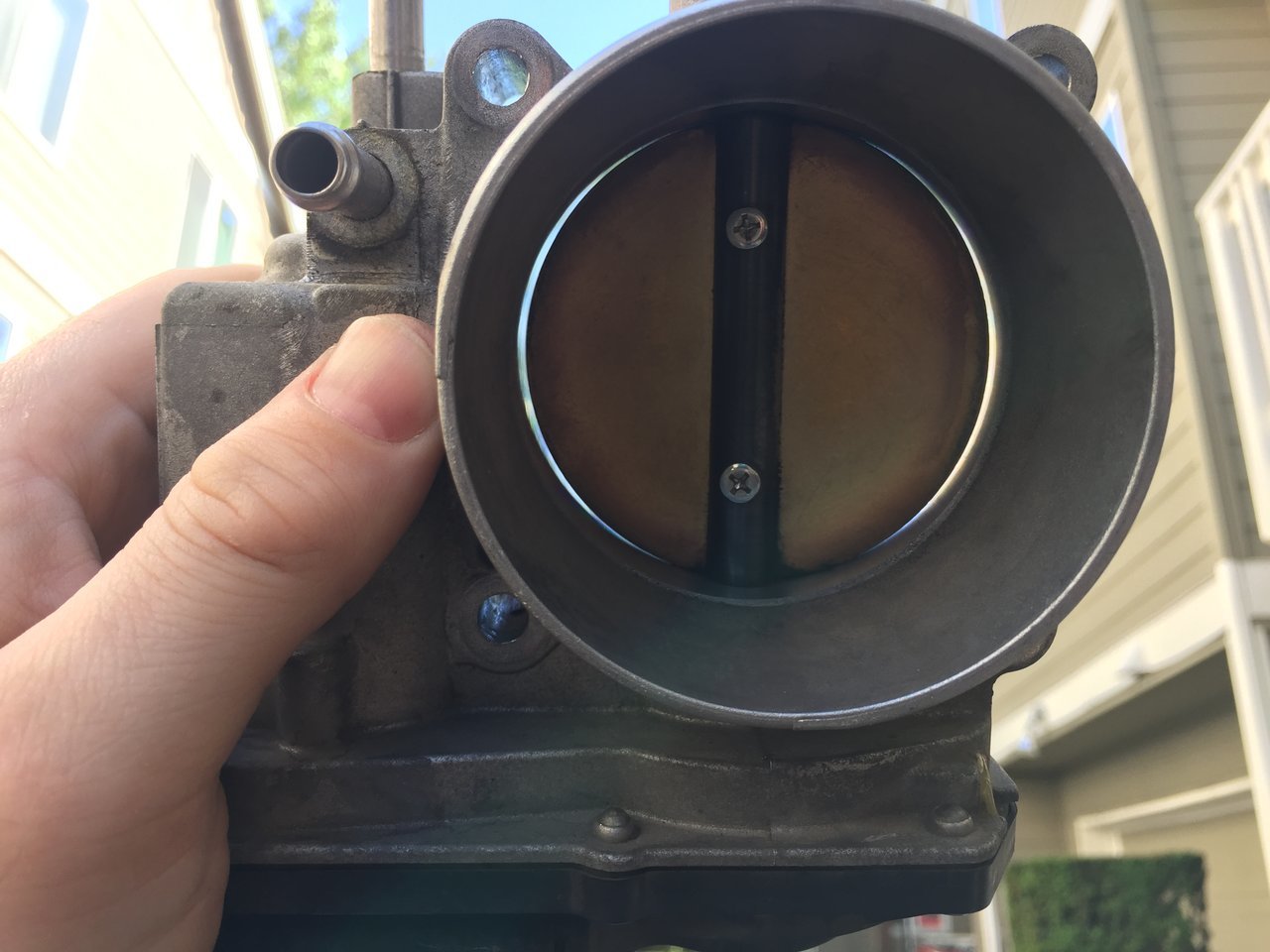
- The Minimum Air Rate: The tiny engineered gap acts as a preset baseline for idle air volume.
- Preventing Stalling: A 100 percent hermetic seal would create a high-vacuum lock and immediately choke the motor.
- Thermal Expansion: Metals expand and contract with intense under-hood heat, so engineers build in tolerances to prevent the brass plate from binding against the aluminum bore.
Drive-by-Wire Versus Mechanical Systems
The mechanics of how that gap is maintained depend heavily on your vehicle’s vintage and technology stack. Older mechanical cable setups relied on an idle air control valve or an adjustable stop screw to dictate the resting position. Today, modern Drive-by-Wire electronic throttle bodies handle everything via an integrated internal electric actuator motor.
- Electronic Actuators: In 2026, computers command the electronic throttle control (ETC) motor to micro-adjust the plate angle based on coolant temperature and electrical load.
- Fail-Safe Springs: When the ignition is turned off, a default mechanical spring pulls the plate to a specific “limp” home or resting angle, which still leaves that trademark sliver of light.
How to Diagnose a Stuck or Carbon-Blocked Throttle Valve
Identifying Normal Gaps Versus Carbon Buildup
While a tiny, factory-engineered gap is completely normal, an uneven or excessively wide gap points to a mechanical failure or severe contamination. Over tens of thousands of miles, oil vapor and exhaust residue bake onto the bore perimeter. This black sludge can trick you into thinking the gap is larger than it actually is, or conversely, it can gum up the mechanism so badly that the valve cannot return to its proper resting point.
- Visual Inspection: Look for a uniform halo of light around the butterfly plate. If light only shines through one side, the plate might be warped or bound on its shaft.
- The Carbon Ring: A thick ridge of black varnish built up right where the plate seals can trap the valve slightly open, causing high or surging idle speeds.
- Electronic Calibration: If you manually force an electronic throttle plate open with your fingers while cleaning it, you risk stripping the plastic internal gears or throwing off the electronic calibration.
Testing Throttle Response and Position Sensors
If you suspect your throttle body is failing to close or open correctly, you need to look beyond raw visual checks. Modern powertrain control modules monitor the throttle position sensor (TPS) data continuously to verify that the physical plate matches what the computer is demanding.
- Scan Tool Data: Hook up an OBD2 scanner and check the absolute throttle position percentage. A healthy closed throttle usually reads between 3 to 5 percent open, not absolute zero.
- Relearn Procedures: If you recently cleaned or replaced the unit, failing to perform an electronic idle relearn can leave the computer confused about where the baseline “closed” position actually lives.
- Spring Tension Check: With the engine off and battery disconnected, pushing the valve should yield smooth resistance with an immediate, snappy return back to its resting resting position.
Step-by-Step Guide to Cleaning and Restoring Proper Throttle Plate Movement
If carbon buildup prevents the throttle plate from sealing correctly, a careful cleaning can often resolve erratic idle issues. Always disconnect the negative battery terminal before starting any work on 2026 electronic throttle control systems to prevent erratic actuator calibration.

Recommended Cleaning Procedure
- Remove the air intake duct leading directly into the throttle body assembly to gain full visual access to the butterfly valve.
- Turn the ignition key to the ON position without starting the engine, and have an assistant gently press the accelerator pedal to open the plate completely, or use a clean tool to hold it open manually if the system permits.
- Spray a dedicated, sensor-safe throttle body cleaner onto a lint-free shop towel rather than spraying the unit directly, avoiding oversaturation of the electronic actuator motor.
- Wipe away accumulated black carbon deposits around the inner bore and the outer edge of the throttle plate until the metal is completely bare.
- Dry the area thoroughly with compressed air or a clean microfiber cloth before reconnecting power and reinstalling the intake duct.
What If It Still Doesn’t Work?
If cleaning the carbon buildup does not allow the throttle plate to achieve its proper closed resting position, underlying mechanical or electrical failures are likely at fault. Automotive diagnostic data from 2026 technical service bulletins indicates that persistent gaps usually point to deeper system degradation.
- Perform an electronic throttle re-learn procedure using an advanced OBD2 scan tool capable of resetting actuator adaptation parameters.
- Inspect the internal plastic gears of the electronic throttle actuator for stripped teeth or binding caused by thermal stress.
- Check the wiring harness and throttle position sensor (TPS) reference voltage for intermittent shorts or high resistance.
- Seek professional diagnostic assistance from a certified technician if the electronic control unit (ECU) fails to send proper closure commands. Professional replacement of a faulty throttle body assembly generally ranges from $250 to $650, including parts and labor.
Conclusion
To summarize, a modern throttle body is purposefully designed with a microscopic gap when fully closed to maintain precise idle airflow and prevent the plate from wedging tight inside the bore. According to verified research and expert automotive engineering sources, addressing carbon buildup or recalibrating the electronic actuator will successfully restore factory idle performance. As a final actionable next step, inspect your air filter and intake tract today to prevent premature carbon accumulation from recurring.
❓ Frequently Asked Questions
Is a throttle body supposed to close all the way when the engine is off?
Even when the engine is turned off, many modern drive-by-wire throttle bodies rest at a slight predetermined angle rather than snapping 100% flat shut. This default position ensures the engine can easily draw air during the next startup sequence.
Why do manufacturers design a gap into the throttle body?
The micro-gap acts as a failsafe mechanical bypass. If the idle air control valve or electronic computer logic fails, this tiny opening ensures enough air enters the cylinders to keep the engine running instead of dying abruptly in traffic.
Can I manually force a throttle plate completely shut?
You should never force a modern electronic throttle plate closed with your fingers. Doing so can strip the delicate internal plastic gears of the actuator motor, permanently ruining the throttle body assembly.
How does carbon buildup make a throttle body look like it has a gap?
Over time, oil vapors and exhaust residue bake onto the perimeter of the butterfly valve and bore wall. This black ring mimics or expands the factory gap, disrupting smooth airflow calibration and causing a high or fluctuating idle.
Should I adjust the throttle stop screw to change the gap?
On modern vehicles, the stop screw is factory-set and sealed. Adjusting it will throw off the Throttle Position Sensor (TPS) calibration, triggering check engine lights and erratic computer management.
How do I know if my throttle body needs to be replaced?
If cleaning the carbon buildup fails to resolve erratic idling, or if the internal electronic actuator motor clicks and fails to respond to accelerator inputs, replacement is required.