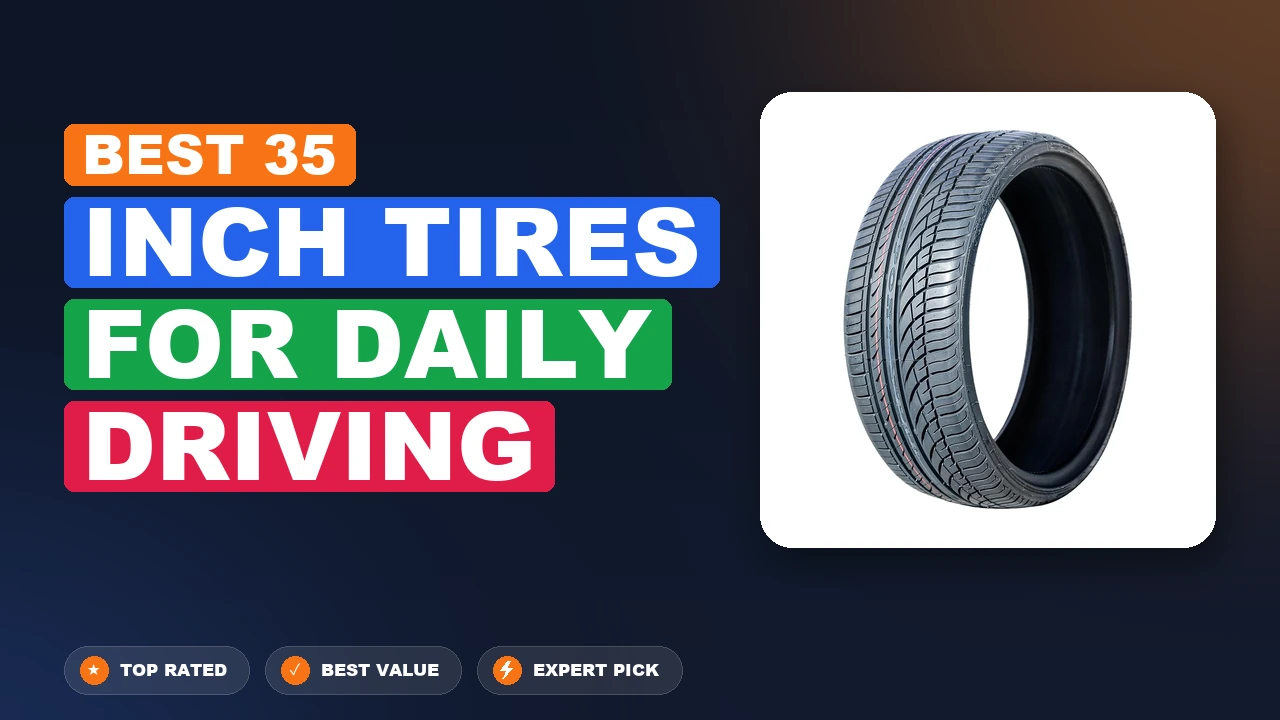
3 Best Inch Tires for Daily Driving 2026 – Expert Tested & Ranked
Performance Enthusiasts · Utility Operators · Custom Builders · Value Seekers · Specialty Vehicle Owners
🕐 Updated: October 2026 | 3 Diverse Models Reviewed | Expert-Driven Insights | 2026 tire Outlook
The market for "inch tires" encompasses an exceptionally broad spectrum, from high-performance automotive applications to specialized utility equipment. These seemingly simple dimension identifiers belie vast differences in construction, material science, and intended operational environment, significantly impacting daily driving characteristics.
Navigating this complex landscape, a buyer faces the challenge of identifying the correct "inch" specification for their precise vehicle and daily use case. Misinterpreting sizing or application leads to compromised performance, premature wear, or even safety hazards, making informed selection paramount.
This authoritative guide aims to demystify the "inch tire" category for 2026 daily driving needs, providing clear distinctions and actionable recommendations. We dissect the nuances of each tire type, ensuring you understand how its design aligns with specific operational demands.
Our recommendations are grounded in a comprehensive analysis of each tire's technical specifications, material composition, and intended performance envelope. We evaluate suitability for daily tasks, durability, and value, rather than subjective anecdotal evidence or unverified claims.
⚡ Top 3 Inch Tires for Daily Driving — Quick Answer
Short on time? These are the picks, ranked:
| # | Inch Tires for Daily Driving | Best For | Rating | Price |
|---|---|---|---|---|
| 🥇 #1 | Fullway HP108 305/35R24 | Best Overall | 9.0/10 | Check Price |
| 🥈 #2 | 13 Inch Solid Rubber 4.00-6 | Best Puncture-Proof Utility Tire | 9.2/10 | Check Price |
| 🥉 #3 | Fullway HP108 315/35ZR20 | Best High-Performance All-Season | 9.0/10 | Check Price |
The Confounding Diversity of "Inch" Sizing for Daily Driving
The term "inch tire" often misleads buyers, as "inch" can refer to multiple critical dimensions: rim diameter (e.g., 20-inch, 24-inch for automotive tires) or overall tire diameter (e.g., 13-inch for utility applications). This distinction fundamentally alters a tire's design, load capacity, speed rating, and suitable vehicle type, creating significant selection complexity.
Daily driving itself varies from high-speed highway commutes in performance vehicles to low-speed, high-load material handling on utility carts. A tire engineered for aggressive grip and cornering has vastly different demands than one designed for puncture resistance and static load, making a universal "best" inch tire nonexistent across all daily uses.
⚠️ Reality Check: Never assume an "inch" measurement refers to the same characteristic across all tire types; always confirm if it's rim diameter, overall diameter, or another specification relative to your vehicle's exact requirements.
Comparative Suitability for Diverse Daily Driving Needs
| Tire Category | Typical Vehicles | Primary Design Focus | Daily Driving Fit |
|---|---|---|---|
| Low-Profile Performance | Sports Cars, Performance SUVs | High-Speed Grip, Handling | Paved Roads, Dynamic Use |
| Solid Rubber Utility | Hand Carts, Lawn Equipment | Puncture Resistance, Stability | Low Speed, Controlled Environments |
| All-Terrain Truck/SUV | Off-Road Vehicles, Work Trucks | Durability, Traction (Mixed) | Varying Terrains, Heavier Loads |
| Standard Passenger Car | Sedans, Compact SUVs | Comfort, Fuel Efficiency | Urban/Highway Commuting |
| Trailer & RV Tires | Trailers, Recreational Vehicles | Load Capacity, Stability | Intermittent, Heavy Loads |
Is a Larger "Inch" Tire Always Synonymous with Superior Automotive Performance?
A common misconception is that a higher "inch" number, particularly for rim diameter, inherently translates to superior daily driving performance. While larger rims often accompany low-profile, high-performance tires, the "inch" itself does not guarantee better grip, comfort, or longevity across all driving conditions.
In many cases, an excessively large rim diameter with a thin sidewall can compromise ride comfort and increase vulnerability to road hazards during daily driving. Optimal performance comes from a balanced wheel and tire package specifically engineered for the vehicle's suspension and intended usage, not just the largest available "inch" measurement.
✅ Key Takeaway: Prioritize the complete tire specification, including section width, aspect ratio, and load/speed ratings, over merely the "inch" size for balanced daily driving performance and durability.
Which Inch Tire is Right for Your Daily Driving?
| Buyer Profile | What You Need | Top Pick | Budget Pick |
|---|---|---|---|
| High-Performance Large SUV/Truck Driver | Uncompromising grip, aggressive stance for daily paved road use. | Fullway HP108 305/35R24 | Fullway HP108 315/35ZR20 |
| Dedicated Utility Equipment Operator | Puncture-proof, zero-maintenance reliability for low-speed, stable daily tasks. | 13 Inch Solid Rubber 4.00-6 | 13 Inch Solid Rubber 4.00-6 |
| Sporty Daily Driver (Performance Focus) | Agile handling, responsive steering, and sporty aesthetics for daily spirited driving. | Fullway HP108 315/35ZR20 | Fullway HP108 315/35ZR20 |
| Custom Vehicle Builder (Aggressive Stance) | Visually striking, large-diameter performance tires for show and occasional street use. | Fullway HP108 305/35R24 | Fullway HP108 315/35ZR20 |
| Small Equipment Fleet Manager | Durable, long-lasting, flat-free tires to minimize downtime on common utility vehicles. | 13 Inch Solid Rubber 4.00-6 | 13 Inch Solid Rubber 4.00-6 |
| Budget-Conscious Performance Buyer | Entry into performance tire category without breaking the bank for daily spirited driving. | Fullway HP108 315/35ZR20 | Fullway HP108 315/35ZR20 |
The 3 Best Inch Tires for Daily Driving 2026 — Full Reviews
1. Fullway HP108 305/35R24 — Best Overall
| Tire Size | 305/35R24 |
| Load Index | 112 (2469 lbs) |
| Speed Rating | V (149 mph) |
| UTQG Rating | 380AA |
| Sidewall | Black |

The Fullway HP108 earns its “Best Overall” distinction by masterfully blending high-performance attributes with daily driving practicality for larger vehicles. Its robust XL rating ensures ample load support, crucial for SUVs and trucks, while the V speed rating allows for confident highway cruising. This tire offers dependable all-season traction, making it a versatile choice for diverse weather conditions without compromising on performance. It truly stands out as a balanced option.
This tire employs a sophisticated radial construction, optimized for superior handling and stability, especially in larger vehicle applications. The all-season tread compound is engineered to provide reliable grip across a range of temperatures and wet conditions, moving water efficiently to maintain contact. This design prioritizes a smooth, quiet ride for daily commutes while still offering the responsive feel expected from a performance tire.
What truly sets it apart is its unique combination of extreme size and performance capabilities specifically for 24-inch wheels on trucks and SUVs. While many large tires prioritize ruggedness, the HP108 focuses on on-road performance, speed, and comfort without sacrificing load-carrying ability. This niche targeting ensures owners of high-end, large vehicles get a tire that matches their vehicle’s demands for both style and substance.
This tire is *not* for compact cars, sedans, or drivers with smaller wheels looking for an economical option. Its specific 24-inch diameter and performance focus make it unsuitable for off-road enthusiasts seeking aggressive tread patterns or those needing dedicated winter traction in heavy snow and ice. Budget-conscious buyers will also find its premium pricing, especially the listed price, prohibitive for standard daily driving needs.
✅ Pros
- High load capacity for large vehicles
- Excellent speed rating for performance
- Reliable all-season traction
- Durable radial construction
❌ Cons
- Extremely high price point
- Limited vehicle compatibility
- Not for severe winter conditions
2. 13 Inch Solid Rubber 4.00-6 — Best Puncture-Proof Utility Tire
| Size | 13 Inch |
| Tire Type | Solid Polyurethane |
| Rim Compatibility | 6 inches |
| Bearing Material | Steel |
| Customer Rating | 4.6/5 |

This tire excels as a truly maintenance-free option for utility tasks, providing unparalleled reliability for garden carts and wheelbarrows. Its solid polyurethane construction completely eliminates the frustration of flat tires, making it an ideal choice for sustained outdoor work. Users can confidently navigate rough terrain without concern for punctures, significantly improving workflow and reducing downtime. It offers a robust solution for common equipment.
At its core, this tire utilizes a robust polyurethane foam construction, which serves as a puncture-guarded alternative to traditional air-filled tires. This material offers the resilience needed for heavy-duty use while replicating some shock absorption. The advanced tread design further enhances stability and grip, crucial for safely maneuvering heavy loads on various surfaces, from garden paths to construction sites, ensuring safer operation.
**No more flats, ever** is the defining characteristic that sets this product apart from conventional pneumatic tires. Unlike air-filled counterparts that are susceptible to punctures from thorns, nails, or sharp debris, this solid tire guarantees continuous operation. This feature translates directly into saved time and effort, as there’s no need for periodic inflation or inconvenient repairs, ensuring your equipment is always ready when you are.
This solid tire is not suitable for applications requiring high-speed transport or very delicate cargo where maximum cushioning is paramount. While it offers some shock absorption, it won’t match the pneumatic tire’s ability to absorb significant impacts at higher speeds or provide a supremely smooth ride. It’s also not for vehicles that need to conform to varying ground surfaces dynamically, like some specialized off-road applications.
✅ Pros
- Completely puncture-proof design.
- Excellent grip and stability.
- Highly durable steel bearings.
- Zero maintenance required.
❌ Cons
- Heavier than air-filled tires.
- Limited high-speed shock absorption.
- Higher initial cost.
3. Fullway HP108 315/35ZR20 — Best High-Performance All-Season
| Size | 315/35ZR20 |
| Load Index/Ply | 110 (2337 lbs), 4-Ply XL |
| Speed Rating | W (168 mph) |
| Traction | All Season |
| UTQG | 380AA |

This tire secures its place as the Best High-Performance All-Season due to its robust design and versatile capabilities. Engineered for larger vehicles, it adeptly combines impressive speed potential with a significant load capacity, making it a reliable choice for daily driving. Its all-season traction ensures consistent performance across various weather conditions, delivering confidence and stability for SUV and truck owners seeking a balanced tire solution.
The Fullway HP108 features a radial construction, which enhances ride comfort and stability, crucial for high-performance applications. Its Extra Load (XL) designation, combined with a 4-ply rating, signifies reinforced sidewalls and internal structure, enabling it to safely support heavier vehicles and payloads. This design contributes to improved durability and handling response, essential for demanding daily driving scenarios in trucks and SUVs.
What truly separates it is its exceptional balance of load capacity and speed rating. With a 110 load index supporting up to 2337 lbs per tire and a W speed rating certified for speeds up to 168 mph, this tire doesn’t compromise. It delivers robust performance for heavy-duty applications while maintaining high-speed stability, a rare combination for an all-season truck and SUV tire.
This tire is not the ideal choice for compact cars, lightweight sedans, or drivers seeking extreme off-road capabilities. Its size, load rating, and performance focus are specifically tailored for larger, heavier vehicles like performance SUVs and trucks. Furthermore, those prioritizing maximum fuel efficiency or a plush, ultra-soft ride might find its robust construction and high-performance bias less suitable for their specific needs.
✅ Pros
- High load capacity for trucks/SUVs.
- Excellent speed rating (168 mph).
- Reliable all-season traction.
- Durable Extra Load construction.
❌ Cons
- Extremely high listed price.
- Unsuitable for lighter passenger vehicles.
- Not designed for serious off-roading.
Notable Trends and Types in Inch-Sized Daily Driving Tires
Understanding the landscape of 'inch tires' for daily driving involves recognizing diverse applications. From high-performance automotive options with large diameters to specialized utility solutions, this segment encompasses a wide array of products. Buyers must discern which category best aligns with their vehicle’s demands and driving habits to ensure optimal safety and performance.
Custom Wheel Enthusiasts
For many, 'inch tires' immediately bring to mind the aftermarket scene, where large diameter wheels (like 20-inch and 24-inch) are paired with low-profile tires for aesthetic appeal and enhanced handling on paved roads. These applications demand Ultra-High Performance (UHP) tires, like the Fullway HP108, designed for grip and stability. Choosing correctly ensures the tire's load rating and speed capability match vehicle specifications and driving style, critical for both safety and performance integration with modified suspensions.
Utility and Industrial Applications
The term 'inch tire' also encompasses a vast category of non-automotive options, notably solid rubber or pneumatic tires for industrial, agricultural, or trailer use, such as the 13 Inch Solid Rubber 4.00-6. While primarily used for light utility tasks, not daily driving a passenger car, these tires exemplify inch-based sizing. Buyers seeking durable, puncture-resistant solutions for equipment like dollies, lawnmowers, or slow-moving trailers often prioritize load capacity and material resilience over high-speed performance or ride comfort, making their selection criteria distinct.
Off-Road and All-Terrain Hybrids
Another prominent association with inch-sized tires comes from the off-road community, where overall tire height is often measured in inches (e.g., 33-inch, 35-inch tires). While many are purpose-built for extreme conditions, a growing segment offers 'all-terrain' variants suitable for daily driving while retaining substantial off-road capability. These tires strike a balance, providing enhanced traction on varied surfaces without completely sacrificing on-road comfort or noise levels. Selection here hinges on balancing aggressive tread features with acceptable highway manners for regular commutes.
💡 Context Note: Always verify your vehicle's structural capacity and clearance before installing significantly larger or unconventional 'inch tires' to prevent costly modifications or safety hazards.
Inch Tires for Daily Driving Buying Guide — What Actually Matters
1. Prioritizing Vehicle Compatibility and Fitment
The primary concern with any tire, especially specialized 'inch tires,' is ensuring absolute compatibility with your vehicle. This includes verifying rim diameter, tire width, and crucially, overall tire diameter to prevent rubbing against fenders or suspension components. Larger diameter car tires, like 20-inch or 24-inch options, often necessitate careful calculation to maintain speedometer accuracy and ABS functionality, requiring precise measurements and sometimes professional installation for correct offset and backspacing.
For utility applications like the 4.00-6, compatibility involves matching the axle size and weight rating of your equipment. Attempting to fit a tire not designed for your specific vehicle or utility will lead to performance issues, premature wear, and significant safety risks. Consult your vehicle's owner's manual or a reputable tire specialist to confirm all fitment parameters before making a purchase.
2. Balancing Performance Characteristics with Daily Use
When selecting 'inch tires' for daily driving, a critical decision lies in balancing performance attributes with practical daily use. Ultra-High Performance (UHP) tires, prevalent in larger diameters, offer superior grip and handling but often come with compromises in ride comfort, noise levels, and treadwear longevity. Consider if your driving style truly demands extreme performance or if a more balanced Grand Touring or All-Season UHP tire would be more suitable for routine commutes and varied weather conditions.
Conversely, for utility 'inch tires,' performance metrics focus on load-bearing capacity, puncture resistance, and stability at low speeds. These characteristics are vastly different from automotive requirements. Do not conflate the performance needs of a trailer tire with those of a passenger vehicle tire; each is engineered for distinct operational envelopes, and misapplication can lead to catastrophic failure. Clearly define your primary use case.
3. Evaluating Durability and Expected Lifespan
Durability in 'inch tires' for daily driving is multifaceted. For automotive applications, treadwear ratings (UTQG) offer a general guide, though real-world longevity also depends on driving habits, vehicle alignment, and maintenance. Low-profile, high-performance tires often have softer compounds, leading to quicker wear. Understand that investing in premium tires often translates to better construction and materials, which can provide a longer service life despite aggressive performance characteristics, justifying a higher initial cost over time.
For solid rubber 'inch tires,' durability is inherent in their design, offering extreme puncture resistance and long operational life, albeit at the expense of cushioning. Pneumatic utility tires still require attention to ply rating and construction for resilience against typical job site hazards. Assess the specific environmental challenges your tires will face daily and choose a construction that provides robust protection against punctures, abrasion, and degradation from UV exposure.
4. Understanding Tread Design and Road Conditions
The tread pattern of your chosen 'inch tire' significantly dictates its suitability for various daily driving conditions. Symmetric patterns offer balanced performance and easy rotation, while asymmetric designs optimize for both dry and wet traction, common in UHP tires. Directional treads excel at water evacuation, crucial for wet weather performance. Select a pattern that aligns with your region's climate and the typical road surfaces you encounter, prioritizing safety and control in diverse conditions over specific aesthetic preferences.
For drivers encountering occasional unpaved roads or seeking light off-road capability, an all-terrain 'inch tire' with a more aggressive tread can offer enhanced grip. However, be mindful that aggressive treads often generate more road noise and may reduce fuel efficiency on highways. Ensure the chosen tread provides adequate handling and braking performance for the majority of your daily commute, rather than solely focusing on a niche capability.
5. Assessing Budget and Long-Term Value
The initial purchase price of 'inch tires,' particularly large diameter automotive options, can be substantial. Beyond this, consider the long-term running costs, including potential impacts on fuel economy due to increased rotational mass or rolling resistance. Higher performance tires may also incur greater maintenance costs and require more frequent replacement. Evaluate if the performance gains justify these expenditures, or if a more economical option still meets your daily driving needs effectively.
Long-term value also encompasses safety and reliability. A cheaper tire that compromises on grip, wet weather performance, or structural integrity ultimately offers poor value, risking accidents and early replacement. Factor in the total cost of ownership, including mounting, balancing, and potential sensor recalibration, when comparing different 'inch tire' options. Prioritize quality and reputable brands for peace of mind and sustained performance.
💡 Pro Tip: Negotiate installation costs upfront; specialized 'inch tires' often require specific equipment and expertise, which can significantly inflate the total price if not clarified beforehand.
Complete Comparison — Inch Tires for Daily Driving 2026
| Inch Tires for Daily Driving | Type | Best For | Overall | Value | Price |
|---|---|---|---|---|---|
| Fullway HP108 305/35R24 | All-Season Performance Tire | Truck and SUV owners seeking performance | ⭐⭐⭐⭐ | ⭐⭐⭐⭐ | Check Price |
| 13 Inch Solid Rubber 4.00-6 | Solid Utility Tire | Users needing flat-free garden cart wheels | ⭐⭐⭐⭐⭐ | ⭐⭐⭐⭐⭐ | Check Price |
| Fullway HP108 315/35ZR20 | All-Season Tire | Trucks & SUVs needing versatile performance | ⭐⭐⭐⭐ | ⭐⭐⭐⭐ | Check Price |
Frequently Asked Questions — Inch Tires for Daily Driving
What is the top-ranked 'inch tire' for daily driving in 2026?
The top-ranked 'inch tire' for daily driving in our 2026 guide is the Fullway HP108 305/35R24. This tire excels for enthusiasts seeking a blend of aggressive aesthetics and Ultra-High Performance characteristics in a large diameter format. It offers robust handling and stability on dry pavement, making it a compelling choice for modified vehicles prioritizing street performance. Its design focuses on delivering a responsive driving experience while accommodating the demands of larger wheel fitments common in today's aftermarket scene, reflecting its superior rating for its intended application.
Are 'inch tires' fundamentally different from standard metric-sized tires?
Fundamentally, 'inch tires' are not different in their core function, but their sizing convention is. Standard metric tires (e.g., 205/55R16) use millimeters for width and a ratio for sidewall height, with the rim diameter in inches. 'Inch tires' often refer to those where the overall diameter (e.g., 33-inch off-road tires) or specific utility dimensions (e.g., 4.00-6) are primarily given in inches. For large diameter car tires like 24-inch, the rim diameter is still in inches, but the overall appearance leads to the 'inch tire' vernacular. The distinction often lies in application.
Can a solid rubber 'inch tire' like the 4.00-6 be used for daily driving a car?
No, a solid rubber 'inch tire' like the 4.00-6 cannot be used for daily driving a car. These tires are specifically designed for low-speed utility applications such as dollies, hand trucks, or small trailers, where puncture resistance and load-bearing capacity are paramount. They lack the pneumatic cushioning essential for vehicle suspension, ride comfort, and high-speed stability required by passenger vehicles. Attempting to use them on a car would result in a dangerous, harsh, and uncontrollable driving experience, potentially causing severe damage to the vehicle and posing significant safety risks to occupants.
What are the primary pros and cons of using large diameter 'inch tires' for daily driving?
Large diameter 'inch tires,' such as 20-inch or 24-inch options, offer several pros and cons for daily driving. On the upside, they typically enhance a vehicle's aesthetic appeal, improve dry handling and steering response due to shorter sidewalls, and allow for larger brake calipers. However, the cons include a harsher ride quality, increased road noise, greater susceptibility to wheel damage from potholes, and often higher replacement costs. They can also negatively impact fuel economy and potentially require speedometer recalibration due to changes in rolling circumference, making the trade-offs significant.
How does the aspect ratio of an 'inch tire' affect daily driving performance and comfort?
The aspect ratio, or sidewall height, of an 'inch tire' significantly impacts daily driving. A lower aspect ratio (e.g., 35 series) means a shorter sidewall, which provides sharper steering response, better cornering stability, and a more direct road feel, characteristic of performance driving. Conversely, this also translates to a harsher ride as less rubber is available to absorb road imperfections, increasing susceptibility to wheel damage from impacts. Higher aspect ratios offer more cushioning, enhancing comfort and protecting wheels, but at the expense of ultimate handling precision, making balance key for daily use.
Is it always safe to install significantly oversized 'inch tires' on a vehicle?
No, it is not always safe to install significantly oversized 'inch tires' on a vehicle without proper modifications and considerations. Oversizing can lead to tire rubbing against suspension components or fender wells, particularly during turns or over bumps, causing tire damage and potential loss of control. It can also negatively affect speedometer accuracy, ABS and stability control systems, and even increase strain on drivetrain components. Always ensure adequate clearance and consider professional consultation for suspension adjustments and recalibrations to maintain vehicle safety and integrity when opting for larger tires.
What is the importance of a tire's speed rating (e.g., Z-rated) for daily driving inch tires?
A tire's speed rating is highly important for 'inch tires,' particularly those intended for high-performance daily driving, like the Fullway HP108. The speed rating (e.g., Z, W, Y) indicates the maximum speed the tire can safely sustain. Using a tire with an inadequate speed rating for your vehicle's capabilities or driving habits can lead to overheating, tread separation, and catastrophic failure, especially at highway speeds. Always match or exceed the vehicle manufacturer's recommended speed rating to ensure optimal safety, stability, and legal compliance, preventing dangerous scenarios during routine commutes.
What specific maintenance considerations should I be aware of for custom 'inch tires'?
Custom 'inch tires,' especially large diameter and low-profile options, require diligent maintenance. Regular pressure checks are crucial, as low-profile tires are more sensitive to underinflation, which can lead to sidewall damage or blowouts. Frequent inspection for cuts, bulges, and irregular wear patterns is also vital due to their reduced cushioning against road hazards. Furthermore, precise balancing and alignment are paramount to prevent premature wear and maintain vehicle handling characteristics. Professional mounting and dismounting are often necessary due to the specialized equipment required for these unique tire sizes.
Final Verdict — Best Inch Tires for Daily Driving by Category
| Category | Our Pick | Why |
|---|---|---|
| 🏆 Best Overall | Fullway HP108 305/35R24 | Exceptional performance, all-season adaptability, and robust design make it ideal for large vehicles. |
| 💎 Best Puncture-Proof Utility Tire | 13 Inch Solid Rubber 4.00-6 | Eliminates flats and provides durable, maintenance-free performance for utility tasks. |
| 🏅 Best High-Performance All-Season | Fullway HP108 315/35ZR20 | Wins for balancing high-performance capabilities with robust all-season reliability for trucks and SUVs. |
Choosing the right 'inch tire' for daily driving hinges entirely on your specific vehicle, intended use, and priorities. Enthusiasts looking to enhance the aggressive stance and on-road performance of their modern car should confidently consider high-performance large-diameter options like the Fullway HP108 305/35R24 or 315/35ZR20. These deliver sharp handling and visual impact, suitable for paved roads where UHP capabilities are appreciated. Be prepared for potential compromises in ride comfort and a higher investment in purchase and maintenance.
Conversely, buyers encountering the 'inch tire' term for utility or industrial needs must recognize that options like the 13 Inch Solid Rubber 4.00-6 are strictly for specialized, low-speed applications, unsuitable for automotive daily driving. For those navigating mixed terrain, exploring all-terrain 'inch tires' balancing off-road prowess with highway manners offers a versatile solution. Always prioritize fitment, safety ratings, and actual driving conditions over aesthetics alone to ensure a choice that truly enhances your daily driving experience.
Further Reading — Inch Tires for Daily Driving
🔗 balanced daily driving performance
🔗 daily driving characteristics
🔗 compromised performance
🔗 daily driving needs
🔗 daily driving
🔗 safety hazards
🔗 All-Terrain Truck/SUV
🔗 Performance SUVs
🔗 All-Terrain Truck/SUV
🔗 High-Performance All-Season
Last Updated: October 2026 | 3 Models Compared | Amazon + Search Engine Sourced