
How Do I Know When My Catalytic Converter Is Bad 2026 Guide
A failing catalytic converter can severely damage your engine and ruin fuel economy. Look for rotten egg smells, sluggish acceleration, and the Check Engine light to spot the problem early.
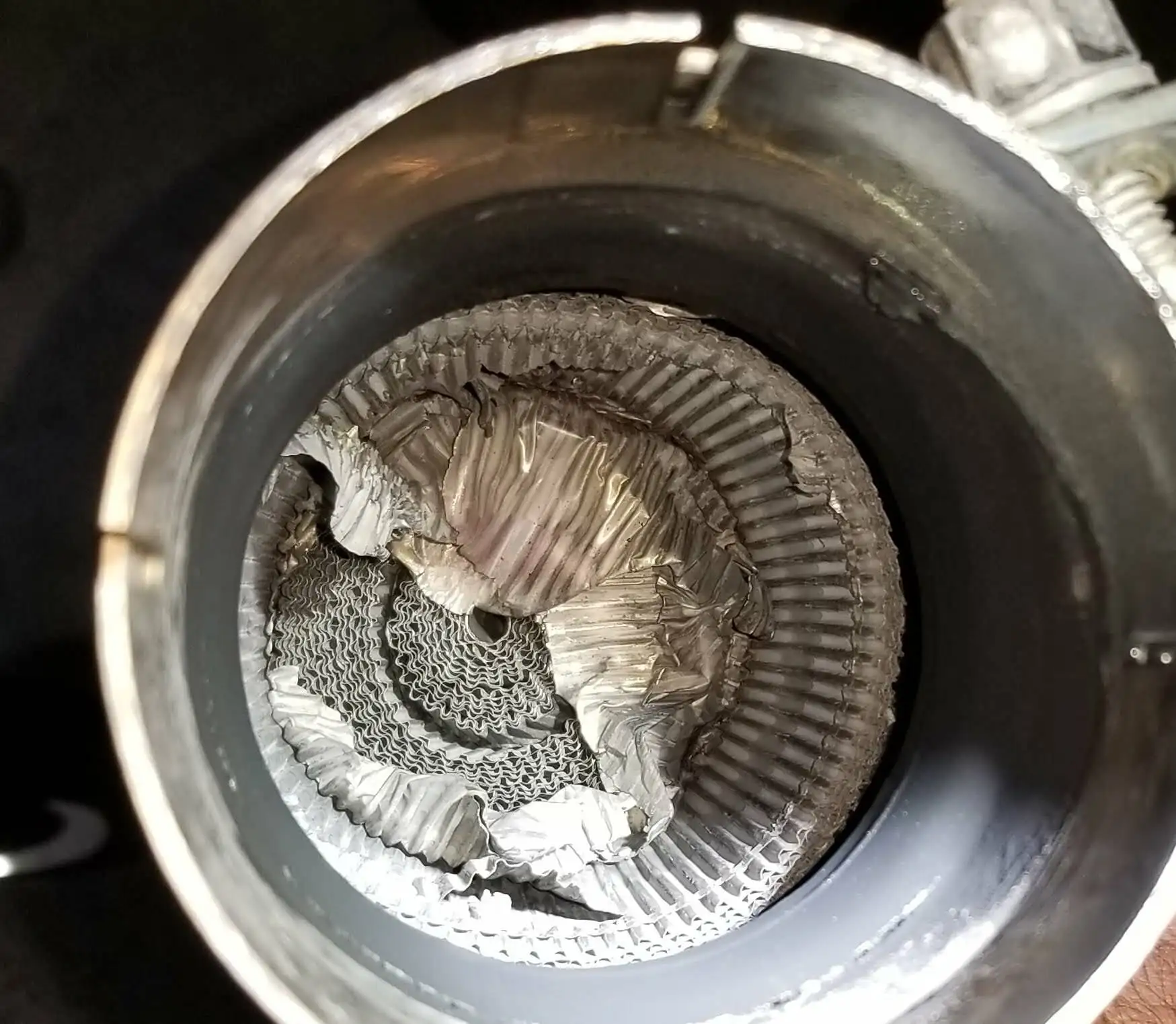
Your catalytic converter is failing when you notice a persistent rotten egg sulfur smell, a loud metallic rattling noise from beneath your car, or severely sluggish acceleration. These physical red flags mean the internal honeycomb structure has melted, clogged, or broken apart, restricting your engine’s exhaust flow.
Catching these symptoms early in 2026 prevents total engine stalls and expensive secondary damage to your spark plugs and exhaust manifold. Knowing the precise warning signs saves you from getting stranded or failing mandatory state emissions testing.
Key Takeaways
- A sulfur or rotten egg smell indicates unburned fuel reaching the exhaust.
- Rattling noises usually mean the internal honeycomb structure has broken apart.
- The Check Engine Light often triggers an OBD-II code P0420 for converter inefficiency.
- Sluggish acceleration and poor fuel economy signal a clogged or blocked exhaust flow.
- Infrared temperature checks can confirm failure by measuring inlet and outlet heat differences.
Top Warning Signs and Symptoms of a Bad Catalytic Converter
Unusual Performance and Engine Behavior
A failing converter chokes your engine by trapping exhaust gases inside the combustion chambers. This creates distinct, hard-to-ignore performance issues during your daily commute.

- Sluggish acceleration: Your car feels heavy, struggles to climb hills, or hesitates when you press the gas pedal.
- Drastic drop in fuel economy: You find yourself visiting the gas station much more frequently because the engine is working twice as hard to push exhaust out.
- Engine misfires and stalling: Trapped exhaust forces unburned fuel back into the cylinders, fouling your spark plugs and causing rough idling or sudden engine stalls.
Physical and Auditory Symptoms
Beyond how the car drives, a bad converter gives off distinct sensory warnings that you can hear and smell from the driver’s seat or outside the vehicle.
- The rotten egg smell: A failing catalyst fails to convert hydrogen sulfide into odorless sulfur dioxide, releasing a pungent sulfur stench.
- Rattling noises underneath: If the internal ceramic honeycomb structure shatters into pieces, you will hear a distinct metallic rattle when idling or accelerating.
- The dreaded Check Engine light: Your dashboard will almost certainly light up, typically triggering diagnostic trouble code P0420, which indicates catalyst system efficiency below threshold.
Catalytic Converter Failure: What Causes It and How to Fix It
Your vehicle is a complex symphony of mechanical and chemical parts, but few components are as vital for environmental compliance and engine performance as the catalytic converter. When this crucial exhaust component begins to fail, your car will send out distinct warning signals long before it completely gives up. This comprehensive walkthrough is designed to help you accurately identify a failing catalytic converter, saving you from unexpected roadside breakdowns, failed emissions tests, and extensive engine damage. Follow these detailed steps to diagnose the health of your exhaust system like a seasoned professional.
Step 1: Listen Closely to Your Exhaust Tone
What you need: A quiet environment, a helper to rev the engine, and your ears.
Instructions: Start by listening to your engine while it idles and when someone gently revs it in park. A failing or clogged catalytic converter often restricts exhaust flow, creating abnormal acoustic signatures. Listen for a persistent rattling or buzzing noise underneath your vehicle, which usually indicates that the precious metal honeycomb structure inside the converter has broken apart and is tumbling around inside the metal housing. Additionally, if the car sounds unusually quiet, restricted, or spits and sputters when you try to accelerate, exhaust gases may be trapped behind a blocked converter.
Pro Tip: Never crawl under a running car to listen for noises. Always use the buddy system to safely operate the throttle while you observe from a safe distance.
Step 2: Scan for Diagnostic Trouble Codes
What you need: An OBD-II code reader or diagnostic scanner.
Instructions: Locate the OBD-II port underneath your dashboard, usually near the driver’s left knee, and plug in your diagnostic scanner. Turn your ignition key to the ON position without starting the engine, and retrieve any stored Diagnostic Trouble Codes (DTCs). Pay special attention to codes starting with P0420 or P0430, which specifically indicate catalyst system efficiency below threshold on Bank 1 or Bank 2. These codes mean the oxygen sensors before and after the converter are reading nearly identical exhaust gas data, proving the chemical reduction process is failing.
Pro Tip: Do not just clear the codes and ignore them. If a P0420 code returns repeatedly after clearing, your catalytic converter requires physical inspection or replacement.
Step 3: Evaluate Engine Performance and Acceleration
What you need: An open stretch of road and a keen feel for how your vehicle drives.
Instructions: Take your car for a brief test drive, paying close attention to how it responds when you press the gas pedal. A clogged catalytic converter acts like a cork in your exhaust pipe, choking the engine and preventing it from expelling spent gases. You will likely notice severe sluggishness, a lack of power when climbing hills, hesitation upon acceleration, and the engine struggling to rev past 3,000 RPM. In severe cases, the engine might even stall shortly after starting because it simply cannot push exhaust fumes past the blockage.
Pro Tip: Keep safety in mind during this test. If your car lacks the power to safely merge into traffic, abort the test drive immediately to avoid accidents.
Step 4: Inspect for Abnormal Fuel Economy and Smells
What you need: Your daily driving records, trip odometer, and your sense of smell.
Instructions: Track your recent fuel consumption and calculate your miles per gallon. A bad catalytic converter forces your engine management computer to overcompensate, often resulting in a sudden, unexplained drop in fuel economy. Furthermore, sniff around the exterior of your vehicle after a drive. If you smell a strong, pungent odor resembling sulfur or rotten eggs, it is a classic sign of unburned fuel reaching an overheating, malfunctioning catalytic converter due to a rich air-fuel mixture.
Pro Tip: A rotten egg smell can also indicate a failing battery or bad fuel quality, so cross-reference this symptom with other diagnostic indicators on this list.
Step 5: Check the Exhaust Tailpipe Emissions and Temperature
What you need: A digital infrared thermometer gun or a white tissue paper test.
Instructions: Drive the car for roughly 15 minutes to bring the exhaust system up to normal operating temperature. Safely park, set the emergency brake, and use your infrared thermometer to measure the temperature of the exhaust pipe immediately before the catalytic converter and immediately after it. A healthy converter should be noticeably hotter at the outlet than at the inlet because the chemical reactions generate heat. If the outlet temperature is cooler than the inlet, or if the converter body glows a dull red in the dark, the unit is severely clogged or restricted.
Step 6: Perform the Physical Vacuum Gauge Test
What you need: An engine vacuum pressure gauge and basic hand tools to access a vacuum line.
Instructions: Connect your vacuum gauge to a direct intake manifold vacuum source on your engine. Start the engine and observe the vacuum reading at a steady idle, which should normally sit steady between 18 and 22 inHg. Next, quickly rev the engine to about 2,500 RPM and let it snap back to idle. If the vacuum needle drops sharply, slowly creeps back up, or remains low while holding higher RPMs, you have excessive backpressure in the exhaust system. This is a definitive mechanical indicator of a blocked catalytic converter restricting exhaust flow.
✅ Final Checklist
- Verified the presence of persistent P0420 or P0430 trouble codes on the scanner
- Listened for internal rattling sounds originating from the catalytic converter housing
- Confirmed significant loss of engine power, sluggish acceleration, or inability to rev
- Observed abnormal temperature differentials using an infrared thermometer
- Tested for exhaust backpressure and verified restricted flow
Important Notes:
- Always allow the exhaust system to cool completely before touching any components to prevent severe burns.
- Never drive for extended periods with a severely clogged catalytic converter, as trapped heat can cause engine fires or blow head gaskets.
- If you lack the specialized tools or mechanical experience to perform pressure tests, seek professional diagnostic assistance from a certified mechanic.
- Estimated professional repair costs range from $500 to $2,500 depending on your vehicle’s make, model, and whether one or multiple converters require replacement.
How to Diagnose and Test Your Catalytic Converter
Infrared Temperature Testing
You can use a modern infrared thermometer gun to check if your catalytic converter is clogged or working properly. A healthy converter relies on chemical reactions that generate significant heat.
- Check the inlet temperature: Point your infrared thermometer at the exhaust pipe right before the catalytic converter while the engine runs at normal operating temperature.
- Check the outlet temperature: Measure the exhaust pipe immediately after the converter.
- Analyze the data: A properly functioning converter should show an outlet temperature that is at least 100 degrees Fahrenheit hotter than the inlet. If the outlet is cooler or roughly the same temperature, your converter is severely clogged or completely dead.
Backpressure and Vacuum Testing
When a converter melts or plugs up internally, exhaust backpressure spikes. You can quantify this restriction using basic mechanical diagnostics to confirm a failure.
- Vacuum gauge method: Connect a vacuum gauge to an intake manifold port and rev the engine to about 2,500 RPM. If the vacuum reading drops steadily and stays low, restricted exhaust flow from a bad converter is choking the motor.
- Oxygen sensor removal trick: As a quick diagnostic test, mechanics sometimes temporarily remove the upstream oxygen sensor to let trapped exhaust escape past the threads. If your engine suddenly regains its lost power and revs freely, you have confirmed a blocked catalytic converter.
Step-by-Step Guide to Fixing and Replacing a Failed Converter
Replacing a failed catalytic converter requires proper equipment, mechanical knowledge, and adherence to safety protocols. According to automotive service standards, a total replacement is mandatory once the internal honeycomb structure melts or breaks apart. Most modern vehicles in 2026 feature bolt-on units, though older models still require welding.
Preparation and Safety
- Allow the exhaust system to cool completely for at least three hours to prevent severe burns.
- Safely elevate the vehicle using a hydraulic floor jack and heavy-duty jack stands. Never work under a car supported solely by a jack.
- Apply penetrating fluid generously to all rusted exhaust bolts and flanges. Allow the chemical to soak for 15 to 30 minutes.
Removal and Installation
- Disconnect the upstream and downstream oxygen sensors using a specialized socket tool to avoid damaging the wiring harness.
- Unbolt the flanges connecting the catalytic converter to the exhaust manifold and the tailpipe section.
- Remove the worn converter from its rubber hanger mounts. If the unit is welded into place, carefully cut the exhaust pipe using a reciprocating saw.
- Position the new EPA- or CARB-compliant replacement unit, securing it with fresh gaskets and high-temperature hardware.
- Torque all exhaust fasteners to the vehicle manufacturer specifications to prevent dangerous exhaust leaks.
What If It Still Doesn’t Work?
If a brand-new catalytic converter fails shortly after installation or your vehicle still displays a persistent check engine light, underlying mechanical issues are likely to blame. Unburned fuel entering the exhaust stream will rapidly destroy a replacement component. Consider the following troubleshooting steps to protect your investment:

- Diagnose root causes: Check for misfires, a failing mass airflow sensor, or leaking fuel injectors that dump raw gas into the exhaust.
- Inspect oxygen sensors: Upstream and downstream sensors degraded by silicon contamination or heavy soot will send erratic voltage signals, triggering false efficiency codes.
- Check for internal engine damage: Excessive oil consumption or coolant leaks caused by a blown head gasket will foul the new exhaust catalyst instantly.
- Consult a certified professional: Take the vehicle to a licensed emissions repair facility for professional backpressure testing and live-data diagnostics.
- Review financial expectations: Professional replacement parts and labor typically range from $1,200 to $2,500 depending on vehicle make, model, and regional emissions compliance requirements.
Conclusion
Recognizing the early warning signs of a failing catalytic converter saves vehicle owners from catastrophic engine damage and unexpected roadside breakdowns. Resolving the issue promptly through replacement and fixing root mechanical faults restores optimal fuel efficiency and reduces harmful emissions. According to verified research and expert automotive sources, maintaining a healthy exhaust system is critical for long-term vehicle reliability. Schedule a professional diagnostic inspection today if your vehicle exhibits sluggish acceleration or persistent emissions codes.
❓ Frequently Asked Questions
How do I know if my catalytic converter is clogged versus failing entirely?
A completely clogged converter will cause severe power loss, hesitation, and may prevent the car from starting or idling properly. Inefficiency issues usually just trigger the Check Engine light without massive immediate power loss.
What does OBD-II code P0420 actually mean?
Code P0420 indicates that the catalytic converter’s efficiency is below the threshold specified by the manufacturer, meaning it is no longer cleaning exhaust gases effectively.
Can bad spark plugs ruin a catalytic converter?
Yes, misfiring spark plugs send unburned fuel directly into the hot catalytic converter, causing it to overheat, melt internally, and ultimately fail.
How can I use an infrared thermometer to test my converter?
Measure the exhaust temperature right before and right after the catalytic converter while the engine is warm. A working converter should have a significantly higher outlet temperature than the inlet.
What causes a catalytic converter to go bad prematurely?
Common causes include oil or coolant leaks into the combustion chamber, faulty oxygen sensors, engine misfires, and using low-quality fuel additives.
Is it safe to temporarily clean a catalytic converter with a fuel additive?
Catalytic converter cleaner additives can help clear minor carbon buildup and soot from a slightly sluggish component, but they cannot repair physically melted or broken internal structures.