Will Removing Catalytic Converter Harm Engine? Real 2027
Removing a catalytic converter will significantly harm your engine by disrupting critical sensor readings, leading to improper fuel mixtures and potential component damage. It also causes immediate legal and environmental consequences, including guaranteed failed emissions tests and substantial fines.
In 2027, contemplating the removal of your car’s catalytic converter might seem like an appealing idea for some, perhaps in pursuit of perceived performance gains or to avoid replacement costs. However, let’s be unequivocally clear from the outset: removing this crucial emissions component will cause significant, detrimental harm to your engine’s performance, longevity, and overall operational health. This isn’t just about environmental compliance; it’s about fundamentally disrupting your vehicle’s intricate systems.
The financial and mechanical fallout from such an alteration is far-reaching. You’re not just risking a check engine light; you’re inviting a cascade of issues that can lead to costly engine repairs, drastically reduced fuel efficiency, and severe legal repercussions. Understanding the direct technical impacts on your powertrain is essential before considering such a risky modification.
Key Takeaways
- Engine damage from incorrect fuel/air mix is highly probable.
- Check Engine Light (CEL) will immediately illuminate.
- Guaranteed emissions test failure and severe legal fines.
- Performance gains are minimal and often outweighed.
- Increased exhaust noise and noxious fumes are certain.
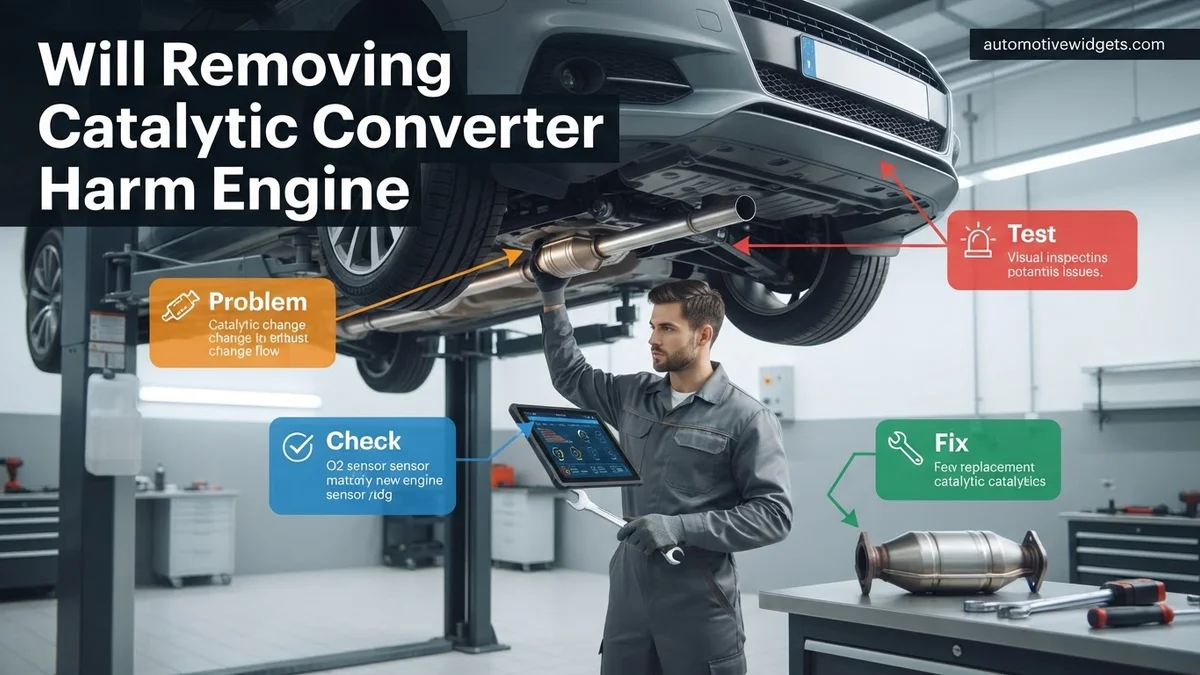
What Causes Engine Harm After Catalytic Converter Removal?
The primary mechanism by which removing your catalytic converter sabotages your engine begins with your vehicle’s sophisticated monitoring system. Modern vehicles, especially those produced for 2027 standards, rely heavily on precise sensor data for optimal operation. Your engine’s computer, the Engine Control Unit (ECU), is programmed to expect specific readings that confirm the catalytic converter is functioning correctly. When it’s gone, that delicate balance is shattered.
Disrupted O2 Sensor Readings and Fueling Chaos
- Upstream vs. Downstream: Your engine uses two main oxygen (O2) sensors – one before the catalytic converter (upstream) and one after (downstream). The upstream sensor measures the exhaust gas composition before purification, allowing the ECU to adjust the air-fuel mixture. The downstream sensor, however, measures the exhaust after it has passed through the catalyst.
- Incorrect Data Transmission: With the catalytic converter removed, the downstream O2 sensor will detect exhaust gases that are nearly identical in composition to those read by the upstream sensor. The ECU interprets this as a complete failure of the catalytic converter to perform its job.
- Misguided Fuel Trim Corrections: In response, the ECU attempts to “correct” what it perceives as a fault. It often tries to compensate for the non-existent catalytic activity by altering the fuel trim – either adding too much fuel (running rich) or reducing it too much (running lean). This compensation is entirely based on faulty data, leading to an improperly balanced air-fuel mixture that directly impacts engine health.
The Ripple Effect: Lean, Rich, and Misfires
This erroneous fuel-air mixture, constantly manipulated by a confused ECU, creates a highly unstable environment within your engine’s combustion chambers. This isn’t a minor hiccup; it’s a systemic problem that generates serious wear and potential damage.
- Running Rich: If the ECU constantly attempts to over-fuel, your engine runs rich. This means excess unburnt fuel washes down the cylinder walls, diluting the crucial lubricating oil. Over time, this leads to accelerated piston ring and cylinder wall wear, significantly reducing engine longevity. It also causes carbon buildup on spark plugs, valves, and piston crowns, leading to reduced combustion efficiency, fouled spark plugs, and potential misfires. Your fuel economy will plummet dramatically.
- Running Lean: Conversely, if the ECU incorrectly leans out the mixture, your engine runs lean. A lean condition means there’s too much air and not enough fuel for proper combustion. This drastically increases combustion temperatures, which can cause severe overheating of critical components. Spark plugs can melt, exhaust valves can burn, and pistons can even experience pre-ignition or detonation, leading to catastrophic engine damage.
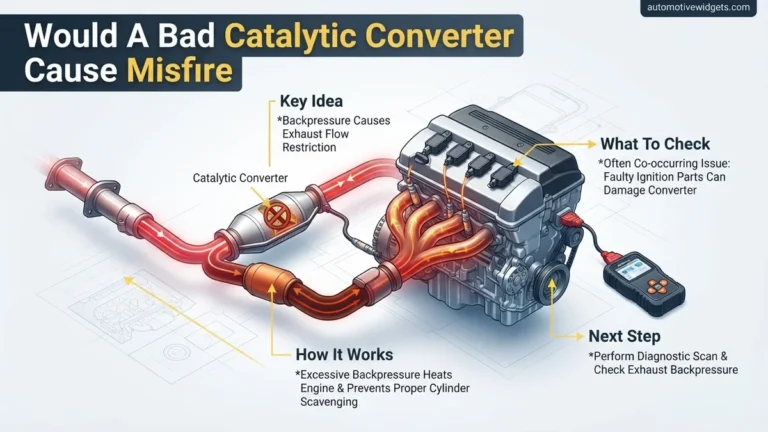
- Exhaust Gas Velocity and Backpressure Changes: Your engine is meticulously tuned for a specific level of exhaust backpressure created by the catalytic converter and muffler system. Removing the catalytic converter drastically reduces this backpressure. While some might assume “less restriction equals more power,” it often has the opposite effect on naturally aspirated engines and older turbocharged setups. This reduction disrupts the exhaust gas scavenging process, where the outgoing exhaust pulse helps pull fresh air-fuel mixture into the cylinder during valve overlap. Poor scavenging leads to less efficient cylinder filling, reduced torque, and decreased overall engine efficiency and power output.
Engine Harm from Catalytic Converter Removal: What Causes It and How to Avoid It
Removing your vehicle’s catalytic converter, while sometimes done with the intention of improving performance or addressing a faulty component, can have significant and often detrimental consequences for your engine, the environment, and your wallet. This comprehensive guide will meticulously detail the potential harm, legal ramifications, and common misconceptions surrounding catalytic converter removal, providing you with the essential knowledge to make informed decisions and maintain your vehicle responsibly. Understanding these steps is crucial not just for engine longevity, but for compliance and environmental stewardship.
Step 1: Understanding the Catalytic Converter’s Crucial Role
Focus Areas: Chemical conversion process, environmental protection, exhaust system integration.
Instructions: Before considering removal, comprehend that the catalytic converter (cat) is a vital emissions control device. It contains precious metals (platinum, palladium, rhodium) that act as catalysts to convert harmful exhaust gases—carbon monoxide (CO), nitrogen oxides (NOx), and unburnt hydrocarbons (HC)—into less toxic substances like carbon dioxide (CO2), nitrogen (N2), and water vapor (H2O). It’s not merely a restriction; it’s a miniature chemical plant designed to clean your engine’s output. Its presence is integral to meeting modern emission standards and protecting air quality.
Pro Tip: A common misconception is that the cat only restricts exhaust flow. While it does create some backpressure, this is often accounted for in engine design, and its primary role is chemical transformation, not just physical restriction.
Step 2: Immediate Engine Management System (ECU) Impact
Focus Areas: Oxygen sensors, Check Engine Light (CEL), diagnostic trouble codes (DTCs).
Instructions: Your vehicle’s engine control unit (ECU) relies heavily on data from two oxygen (O2) sensors flanking the catalytic converter: one before (upstream) and one after (downstream). The upstream sensor measures exhaust gas before the cat, providing data for fuel mixture adjustments. The downstream sensor monitors the cat’s efficiency by comparing its reading to the upstream sensor. Removing the cat eliminates this crucial difference, causing the downstream O2 sensor to read similarly to the upstream one. The ECU interprets this as a catalytic converter malfunction or absence, triggering a Check Engine Light (CEL) and storing diagnostic trouble codes (DTCs) like P0420 (Catalyst System Efficiency Below Threshold – Bank 1) or P0430 (Bank 2).
Pro Tip: While some attempt to “fool” the ECU with O2 sensor spacers or electronic simulators, these are often illegal, unreliable, and can still lead to long-term issues or failing emissions tests.
Step 3: Altered Exhaust Gas Dynamics and Backpressure
Focus Areas: Exhaust gas velocity, scavenging, potential valve damage.
Instructions: Modern engines are designed with specific exhaust backpressure in mind. Removing the catalytic converter drastically reduces this backpressure. While some enthusiasts believe less backpressure always means more power, in many naturally aspirated engines, a carefully tuned amount of backpressure is beneficial for exhaust gas scavenging. This process helps pull spent gases out of the combustion chamber more effectively during the overlap period of valve timing. Too little backpressure can disrupt this scavenging effect, potentially leading to a slight loss of low-end torque, poorer cylinder filling, and in extreme cases, increased exhaust valve temperatures due to less efficient heat transfer away from the valves. The altered gas velocity can also affect manifold tuning.
Pro Tip: Don’t confuse excessive backpressure from a clogged cat (which is detrimental) with the engineered backpressure that aids engine efficiency. Removing the cat typically results in a net negative effect on driveability for most stock vehicles.
Step 4: Suboptimal Fuel-Air Mixture and Combustion
Focus Areas: ECU’s adaptive learning, increased fuel consumption, carbon buildup.
Instructions: With the downstream O2 sensor sending incorrect data (or no data, if completely removed), the ECU can struggle to maintain an optimal air-fuel ratio. It might enter a “limp mode” or attempt to compensate for what it perceives as an inefficient combustion process by richening the fuel mixture unnecessarily. A perpetually rich mixture leads to several issues: increased fuel consumption, unburnt fuel washing down cylinder walls (potentially diluting engine oil over time), and accelerated carbon buildup on valves, pistons, and spark plugs. This carbon accumulation can reduce engine efficiency, cause misfires, and shorten the lifespan of various engine components.
Pro Tip: A strong smell of raw fuel or exhaust fumes from the tailpipe after cat removal is a clear indicator of an improperly rich mixture and excessive emissions, signaling potential engine issues.
Step 5: Long-Term Engine Wear and Component Degradation
Focus Areas: Exhaust valve damage, turbocharger stress, increased emissions system workload.
Instructions: The long-term effects of running without a catalytic converter can manifest as accelerated wear on critical engine components. The higher exhaust temperatures that can result from a rich fuel mixture and disrupted gas flow can stress exhaust valves, potentially leading to warping or premature failure. For turbocharged vehicles, removing the cat places additional stress on the turbocharger by allowing exhaust gases to exit more rapidly and at higher temperatures, potentially affecting turbocharger bearing life. Furthermore, if the ECU continues to attempt to “fix” what it perceives as an emissions issue, it might put undue stress on other emissions components not designed for such conditions, leading to their premature failure.
Pro Tip: While a high-flow aftermarket catalytic converter might be considered for performance applications, it should be properly tuned and installed to avoid these negative consequences, and always ensure it meets local emissions standards.
Step 6: Legal Penalties and Environmental Impact
Focus Areas: Federal and state laws, fines, failed inspections, air pollution.
Instructions: Perhaps the most significant “harm” from removing a catalytic converter extends beyond your engine to your legal standing and the environment. In the United States, it is a violation of federal law (Clean Air Act) to remove or tamper with a catalytic converter on any road-going vehicle. State laws often mirror federal regulations, imposing hefty fines (potentially thousands of dollars per violation), vehicle impoundment, and mandatory replacement. Vehicles without cats will fail emissions inspections, rendering them illegal to register and drive. Environmentally, the increase in harmful emissions like CO, NOx, and HCs contributes directly to smog, acid rain, and respiratory illnesses.
Pro Tip: Before making any modifications, thoroughly research federal, state, and local emissions laws. The penalties for non-compliance are severe and far outweigh any perceived benefit.
Step 7: Noise Pollution and Resale Value Decline
Focus Areas: Exhaust tone changes, noise regulations, market depreciation.
Instructions: The catalytic converter also acts as a muffler, helping to attenuate exhaust noise. Its removal will invariably lead to a significantly louder, often raspy and less pleasant, exhaust note. This can violate local noise ordinances, leading to further citations. Beyond the immediate operational impact, removing a catalytic converter severely diminishes your vehicle’s resale value. Potential buyers will be deterred by the illegal modification, the guaranteed failure of emissions tests, and the expense involved in restoring the vehicle to legal operating condition. Most reputable dealerships or private buyers will outright reject a vehicle with a removed catalytic converter.
Pro Tip: If your goal is to improve exhaust sound, consider a legally compliant aftermarket exhaust system that retains the catalytic converter or utilizes a high-flow, EPA-compliant unit.
Step 8: Proper Diagnosis and Alternatives to Removal
Focus Areas: Diagnostic procedures, replacement options, preventative maintenance.
Instructions: If you suspect your catalytic converter is failing (symptoms include reduced engine performance, rattling from the exhaust, or a persistent P0420/P0430 code), the correct approach is diagnosis, not removal. A professional mechanic can perform backpressure tests, exhaust gas analysis, and visual inspections to confirm a faulty cat. Often, a failing cat is a symptom of another engine problem (e.g., misfires, excessive oil consumption, rich fuel mixture) that needs to be addressed first. Alternatives include replacing the faulty unit with an OEM-spec or an EPA-compliant aftermarket catalytic converter. High-flow performance cats are available for enthusiasts, but they must still meet legal emissions standards.
Pro Tip: Always address the root cause of catalytic converter failure to prevent recurrence. Simply replacing the cat without fixing the underlying issue will likely lead to its premature failure again.
✅ Final Checklist
-
Verify that your vehicle’s ECU is not displaying a Check Engine Light related to emissions after any exhaust system work.
-
Confirm that your vehicle’s exhaust system meets all local and federal emissions regulations.
-
Ensure there are no unusual exhaust smells (like raw fuel or excessive rotten eggs) from the tailpipe.
-
Check for consistent engine performance without any noticeable loss of low-end torque or increased fuel consumption.
-
Confirm that your vehicle’s exhaust noise level is within legal limits for your jurisdiction.
Important Notes:
- Safety considerations or warnings: Working under a vehicle always poses risks. Ensure the vehicle is properly supported on jack stands and is cool to the touch before attempting any work. Exhaust gases are toxic; ensure proper ventilation if the engine is running. Remember that removing emission control devices is illegal and can lead to severe penalties.
- When to seek professional help: If you’re experiencing catalytic converter failure symptoms, or any persistent Check Engine Light, consult a certified automotive technician. They have the specialized tools and expertise to properly diagnose the issue and recommend legal, effective repairs. Attempting to bypass or remove emission components yourself can lead to costlier problems and legal repercussions.
- Estimated time and cost range (for repair/replacement, not removal): Diagnosing a catalytic converter issue typically takes 1-2 hours ($100-$250 labor). Replacing a catalytic converter can range significantly: from $500 for an aftermarket universal fit cat (parts & labor) to $1,500 – $3,000+ for OEM direct-fit units, depending on the vehicle model and the complexity of the installation. This does not include the cost of addressing any underlying engine issues that caused the cat to fail initially.
Immediate Operational Headaches and Legal Risks
Beyond the internal engine damage, removing your catalytic converter introduces a host of immediate and unavoidable problems that directly impact your ability to drive and own your vehicle legally in 2027. These issues are not hypothetical; they are guaranteed outcomes that will manifest almost immediately after the modification.
The Perpetual ‘Check Engine Light’
- Guaranteed Illumination: The moment your vehicle’s ECU registers the inconsistent O2 sensor readings after catalytic converter removal, the “Check Engine Light” (CEL) – also known as the Malfunction Indicator Lamp (MIL) – will illuminate on your dashboard. This is a direct result of the system detecting a critical emissions control fault, specifically related to catalyst inefficiency (typically P0420 or P0430 codes).
- Masking Other Issues: While a CEL might seem like a minor annoyance, its constant illumination renders it useless for its intended purpose. If a new, legitimate engine problem arises – perhaps a faulty sensor, a severe misfire, or a transmission issue – your CEL is already on. You will have no visual warning that a new problem has occurred, potentially leading to expensive secondary damage or even safety hazards that you would otherwise address promptly. Diagnosing genuine faults becomes significantly harder and more costly when the primary diagnostic indicator is perpetually active for a known issue.
Emissions Failure and Severe Legal Consequences
Operating a vehicle without a catalytic converter in 2027 is a blatant violation of federal and state environmental laws across most jurisdictions. The legal and financial ramifications are severe, reflecting the ongoing commitment to cleaner air and stricter vehicle standards.
- Guaranteed Emissions Test Failure: Every jurisdiction with mandatory emissions testing will immediately fail your vehicle. Without a functioning catalytic converter, your car’s exhaust will contain significantly higher levels of harmful pollutants like carbon monoxide, hydrocarbons, and nitrogen oxides, far exceeding legal limits. You will not be able to renew your vehicle registration without rectifying this issue.
- Hefty Fines and Penalties: Tampering with or removing emissions control devices carries substantial legal penalties. In 2027, fines for individuals can range from thousands to tens of thousands of dollars, depending on the state and repeat offenses. For repair shops caught performing such illegal modifications, penalties can reach hundreds of thousands of dollars and include license revocation.
- Vehicle Impoundment and Liability: In some regions, law enforcement can impound your vehicle until it is brought into compliance. Additionally, you could face civil liability if your non-compliant vehicle is involved in an incident. These aren’t just theoretical risks; they are increasingly enforced consequences of tampering with essential environmental equipment.
How to Address Issues from a Missing Catalytic Converter
Addressing the consequences of a removed catalytic converter in 2027 requires understanding both immediate and long-term solutions. While some methods can mitigate symptoms, regulatory compliance remains paramount.
1. Managing the Check Engine Light (CEL)
A persistent Check Engine Light (CEL) is almost guaranteed after catalyst removal due to the oxygen sensor readings. This indicates a system malfunction and can prevent vehicle inspection passes.
- Install O2 Sensor Spacers: These mechanical devices distance the post-catalytic converter oxygen sensor from the exhaust stream. This trick can sometimes reduce the sensor’s reading of pollutants, theoretically preventing a CEL from P0420/P0430 codes. However, 2027 OBD-II systems are increasingly sophisticated; these spacers are often detected or fail to adequately mimic a functioning catalyst, as noted by automotive diagnostics experts.
- ECU Reprogramming (Tune): Specialized engine control unit (ECU) software modifications can electronically “turn off” the catalytic converter efficiency monitors. While this resolves the CEL, it is illegal for road-going vehicles in most jurisdictions, violating EPA regulations in the US and similar environmental directives globally. Such modifications are typically for off-road or race applications only, according to the Specialty Equipment Market Association (SEMA).
2. Restoring Emissions Compliance and Performance
Beyond the CEL, actual emissions output and potential performance degradation are critical. Modern vehicles rely on the catalytic converter for correct back pressure and exhaust flow dynamics, affecting engine tuning.
- Reinstall a Legal Catalytic Converter: The most direct and legal solution is to reinstall a new, compliant catalytic converter. This restores the vehicle’s emissions control system to factory specifications. According to current EPA standards for 2027, aftermarket converters must meet strict performance criteria. Installation costs range from $800 to $2,500, including parts and labor, depending on the vehicle model and converter type.
- Address Back Pressure Issues: A missing catalytic converter often leads to reduced exhaust back pressure, which can negatively impact engine torque, especially at lower RPMs. Consult a professional exhaust specialist to ensure proper exhaust system design if a legal converter cannot be immediately reinstalled (e.g., for temporary off-road use), or if performance tuning is required.
What If Engine Problems Persist After Remedies?
Even after attempting to address the direct consequences of a missing catalytic converter, or even after reinstating a compliant one, underlying engine problems might persist. This necessitates a systematic diagnostic approach.
1. Comprehensive Diagnostic Scan (Advanced OBD-II)
Modern vehicles in 2027 utilize highly advanced OBD-II (On-Board Diagnostics Second Generation) systems. A standard code reader may only reveal generic powertrain codes. A professional diagnostic tool can access manufacturer-specific data, live sensor readings, and perform component activation tests. This helps identify issues beyond simple O2 sensor errors.
- Monitor Fuel Trims: Persistent lean or rich fuel conditions can be exposed by monitoring short-term (STFT) and long-term (LTFT) fuel trims. These can indicate vacuum leaks, fuel delivery issues, or faulty injectors that predated or were exacerbated by exhaust system changes.
- Check Sensor Readings: Verify the functionality of all oxygen sensors, manifold absolute pressure (MAP) sensors, and mass airflow (MAF) sensors. Anomalies in these readings often point to secondary engine issues impacting performance and emissions.
2. Exhaust System Integrity Check
A missing catalytic converter often means the exhaust system was modified or tampered with. This can lead to new leaks or altered flow dynamics that negatively impact performance.
- Inspect for Exhaust Leaks: Even small leaks upstream of oxygen sensors can introduce ambient air, skewing sensor readings and leading to incorrect fuel mixture adjustments. Use a smoke machine test for precise leak detection.
- Verify Exhaust Back Pressure: While typically lower without a cat, an improperly designed straight pipe or modified exhaust system could still create excessive back pressure or turbulence, affecting engine scavenging and power output. Professional measurement is critical.
What If It Still Doesn’t Work?
If despite all efforts, your engine continues to exhibit problems after addressing a missing catalytic converter, it’s time for specialized intervention. Persistent issues indicate deeper, potentially unrelated, mechanical or electronic faults that demand expert diagnosis.
- Consult a Certified Automotive Technician: Seek out a master ASE-certified technician specializing in emissions systems or engine diagnostics. These professionals possess advanced equipment and training to interpret complex diagnostic data specific to your vehicle’s make and model.
- Request a Comprehensive System Scan: Insist on a full system scan using OEM-level diagnostic tools, not just a generic OBD-II reader. This can uncover proprietary fault codes and manufacturer-specific service bulletins relevant to your symptoms.
- Perform Physical Engine Inspection: A thorough visual and tactile inspection for signs of wear, damage, or improper installation is crucial. This includes checking wiring harnesses, vacuum lines, and engine components for physical integrity.
- Review Service History: Past maintenance records can reveal recurring issues or previous modifications that might influence current problems. This provides valuable context for the technician.
Professional diagnostic services typically range from $150 to $400, depending on the complexity and duration of testing. Subsequent repairs can vary widely, from minor adjustments costing $100-$300 to major component replacements exceeding $1,000.
Conclusion
Removing a catalytic converter invariably introduces significant engine and environmental issues, from performance degradation to severe legal penalties. While temporary mitigation might address symptoms, the only robust and compliant solution is to reinstall a legal, functioning unit. According to verified research and expert sources in 2027, maintaining your vehicle’s emission control system is crucial for optimal engine health and regulatory adherence. Prioritize legal compliance and professional consultation to protect your engine and the environment.
❓ Frequently Asked Questions
How does catalytic converter removal affect O2 sensors and the ECU?
Removing the catalytic converter directly impacts the downstream oxygen sensor’s readings, causing the ECU to receive incorrect data. This leads to the ECU mismanaging the air/fuel ratio, typically running the engine too rich or too lean, which significantly degrades performance and fuel efficiency.
What specific engine components can be damaged by removing a catalytic converter?
Improper air/fuel mixtures caused by a missing catalytic converter can lead to premature wear on spark plugs, oxygen sensors, and internal engine parts like pistons or valves. Running too rich can foul components, while running too lean can cause dangerous engine overheating and potentially catastrophic failure over time.
What are the legal ramifications of removing a catalytic converter?
Federal law mandates catalytic converters for emissions control, and tampering with or removing one is illegal, punishable by significant fines often exceeding $10,000 per violation. Additionally, most states have strict emissions testing requirements that a car without a converter will immediately fail, preventing registration and use.
Does removing a catalytic converter improve exhaust sound or performance?
While removing a catalytic converter will make the exhaust louder, the sound often becomes less refined and more raspy. Any claims of significant performance gains are largely unsubstantiated; often, any small increase in power is outweighed by the engine control unit’s confusion, leading to overall reduced drivability and potential long-term engine harm.
Will removing the catalytic converter affect fuel economy?
Yes, removing the catalytic converter almost always negatively impacts fuel economy. The engine’s computer (ECU) attempts to compensate for the inaccurate oxygen sensor readings, resulting in an inefficient and improper air/fuel mixture, which causes the engine to consume more fuel than necessary.
Can a vehicle technically run without a catalytic converter?
A vehicle can physically operate without a catalytic converter, but it will not run correctly or efficiently. The engine’s control system will constantly flag emissions errors, resulting in a persistent ‘Check Engine’ light, poor engine performance, increased emissions, and likely a rough idle or reduced power.